News & Events
Beyond barriers: Dr Nozuko Langa’s decade-long journey to a PhD
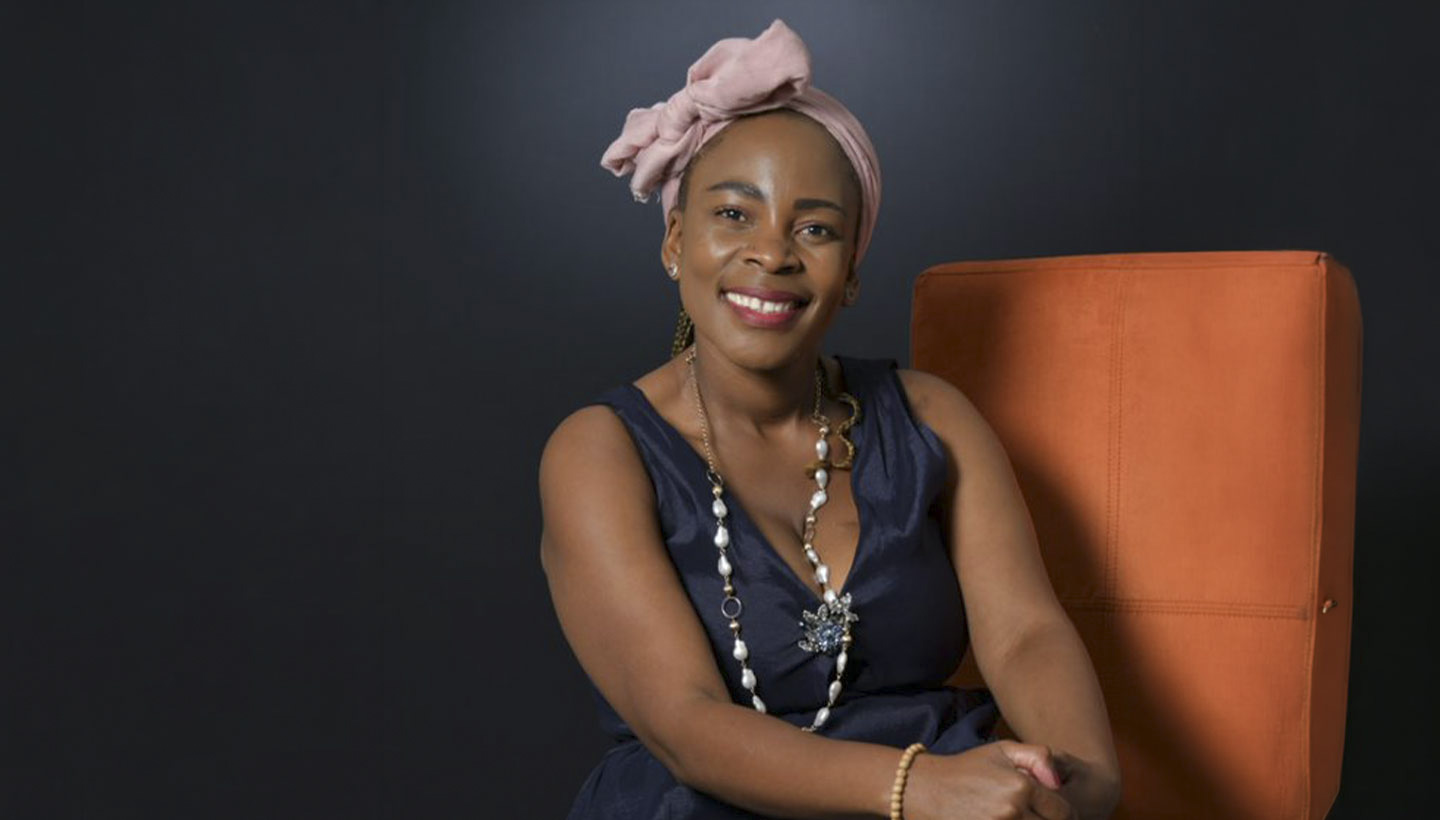
Unisa lecturer Dr Nozuko Langa is set to graduate with a PhD after a decade-long journey marked by perseverance, determination and a commitment to advancing inclusive access to information.
For Dr Nozuko Langa, the doctoral gown she will wear on 7 October 2026 represents far more than an academic qualification. It marks the culmination of a decade-long journey defined by perseverance, faith, sacrifice and determination.
The Unisa lecturer in the Department of Information Science will graduate with a PhD titled Information Access as a Catalyst for Inclusive Rural Development in Selected Public Libraries in the Eastern Cape, South Africa.
Her research examined how access to information through public libraries can contribute to inclusive rural development across four Eastern Cape municipalities: Alfred Nzo, Joe Gqabi, Chris Hani and Buffalo City Metropolitan Municipality.
Using an ethnographic, interpretivist qualitative approach, the study explored how institutional structures, governance practices and community realities influence access to information in rural communities.
Her findings highlight the potential of public libraries to contribute to digital inclusion, educational advancement, health literacy, civic participation and community resilience. The study concludes that stronger, strategic and adequately resourced partnerships between municipalities and public libraries are needed to improve information access and advance inclusive rural development.
But behind the research and academic achievement lies a deeply personal story of persistence.
As a person with a disability affecting one side of her body, Langa has had to adapt many aspects of her academic work. She typed her entire doctoral thesis with one hand, a process that required additional time, patience and determination.
“There were moments when the journey was physically and emotionally demanding,” she says. “Still, I refused to allow disability to define what was possible for my life.”
The demands of completing the doctorate at times became overwhelming. In 2025, Langa reached a point where she considered abandoning her PhD.
“I was drained,” she recalls.
Professor Zethu Nkosi, Executive Dean of the College of Human Sciences, stepped in to support her. The College also provided software to assist with her work, although Langa continued to navigate the physical demands of completing her thesis.
That intervention became an important part of her journey and strengthened her conviction that meaningful inclusion must extend beyond policies and institutional statements.
“Accessibility is not only about physical access to a building. It is also about access to technology, information, communication, appropriate support and an environment where a person can participate fully and independently,” she says.
Her own experience has shaped how she understands inclusion.
Langa says people can sometimes see a disability before seeing the person, their abilities and their contribution. For her, genuinely inclusive environments should enable people to participate confidently, independently and with dignity, without having to repeatedly explain or justify their needs.
“Inclusive environments should anticipate diversity and enable everyone to participate with dignity,” she says.
Her graduation in October follows Deaf Awareness Month and gives the milestone added significance as she reflects on representation and the possibilities that academic achievement can create for Deaf students.
“When a Deaf student sees me graduating with a PhD, I want them to see possibility,” she says. “I want them to say, ‘If she can do it, I can do it too.’”
Her message to others facing barriers is not to allow their circumstances to determine the size of their ambitions.
“Do not reduce your dreams to fit the limitations of the environment around you,” she says. “Continue to pursue excellence, ask for the support you need, and remember that you belong in spaces of knowledge, leadership and influence.”
For Langa, the significance of earning a doctorate extends beyond her own achievement. She hopes her story will encourage others who may have been made to feel that certain academic or professional spaces are beyond their reach.
“If my graduation can help one Deaf student believe that a PhD is possible, then my journey carries an even greater meaning,” she says.
Langa also sees her graduation as a tribute to her late parents, her family and the people who supported and encouraged her throughout the decade-long journey.
She credits her faith in God with sustaining her through some of the most difficult periods of her doctoral studies.
When she walks across the graduation stage on 7 October, the doctoral gown will represent what she describes as a victory. But for Langa, it will also carry a responsibility: to use her achievement and experience to help create opportunities for others.
Her journey demonstrates that academic excellence is not always a straightforward path. Sometimes it requires adapting, asking for support, persevering through difficult circumstances and continuing to believe in what is possible.
Her message is simple:
“Disability is not a limiting factor. Your voice, your knowledge and your presence matter.”
* By Lesego Chiloane, Journalist, Department of Institutional Advancement
Publish date: 2026/09/17