

The African college of excellence in the social and human sciences
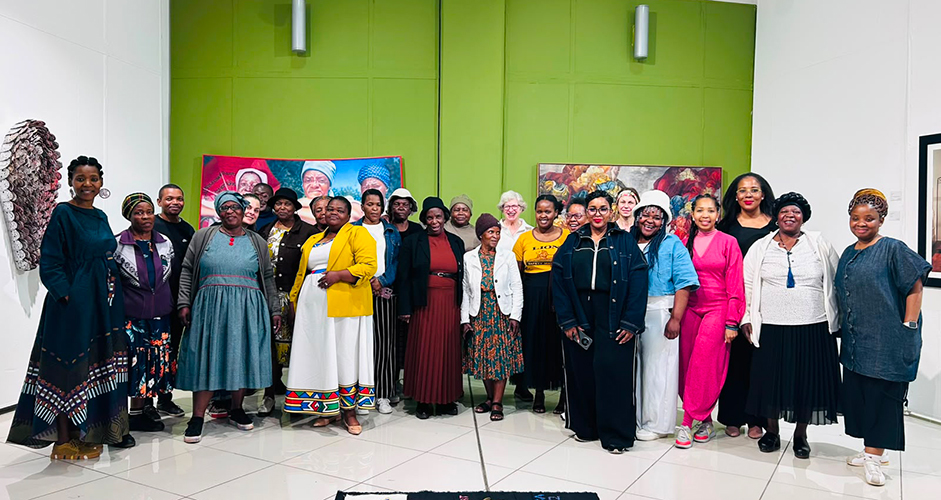
Seventy years after the historic Women's March of 1956, Women's Month at Unisa provided an opportunity to reflect on the ways women continue to carry memory, knowledge, care and history across generations.
There was music in the room. There was laughter. There were stories about mothers and grandmothers, childhood, food, faith and home.
And needles were moving slowly through pieces of fabric. At first glance, it was an embroidery workshop. But on 25 August 2026, the Unisa Art Gallery became something more: a space where memory was shared, knowledge was passed between generations and participants reflected on the people and experiences that have shaped who they are.
Members of the Intuthuko Women's Embroidery Collective, the Chief Albert Luthuli Research Chair and Ditiro Mashigo gathered at the Unisa Art Gallery for an afternoon of fabric, needles, colourful threads and conversation.
The collaborative embroidery workshop was developed in conversation with two exhibitions at the Unisa Art Gallery, The Will to Be and Africa Re-Union. Rather than simply being exhibitions to observe, the works became starting points for conversations about identity, belonging, women’s experiences, memory, Africa and the histories we carry.
The workshop invited participants to think about what they carry that cannot immediately be seen: what the body remembers, the experiences that shape us and the people whose knowledge, care and influence have contributed to who we become.
The participants represented different generations and experiences, including women from the Intuthuko Women's Embroidery Collective, Unisa Art Gallery interns and staff members from the Chief Albert Luthuli Research Chair. Not everyone arrived with embroidery experience, but everyone brought stories, memories and knowledge that became part of the creative process.
The Intuthuko Women's Embroidery Collective comprises Black women from Daveyton and Etwatwa in Ekurhuleni. They entered the university space not only as artists and embroiderers, but also as teachers and knowledge bearers whose expertise has been developed through years of making, living and working within their communities.
Throughout the workshop, the Intuthuko women shared embroidery techniques, guided participants through their creations and brought their own knowledge into the room. As hands worked with fabric and thread, conversations developed around family, place, memory and the meanings participants were giving to their work.
One contributor chose to embroider a memory connected to her grandmother and the preparation of fermented sorghum porridge known as Mabele. What initially appeared to be a story about food became a much deeper reflection on knowledge, fermentation, nourishment and care.
The embroidered Mabele cloth opened a conversation about Indigenous Knowledge Systems (IKS) and the everyday spaces in which knowledge is preserved and passed on. The kitchen becomes an archive. A recipe becomes a record. A grandmother becomes a teacher.
At the end of the process, the participant reflected on how the teaching and sharing that took place during the workshop made her feel mothered in the room.
Another significant moment involved a young male intern from the Unisa Art Gallery. As one of the Intuthuko women guided him through the embroidery process, the lesson became an intergenerational encounter in its own right.
He was learning the blanket stitch, a technique that prompted playful discussion among the women about whether the stitch might be too difficult for him. One of the Intuthuko mothers encouraged him, confident that he would manage because he had been raised by a grandmother in a rural community.
When he completed his piece, he wrote:
"I am just a boy from the rural areas, raised by many women."
The simplicity of the statement carried a deeper meaning. It spoke to the women who had shaped his life and to the often-unrecognised ways in which knowledge, care and resilience are passed between generations.
There was also something significant about the act of creating together.
Around the tables, hands moved slowly through fabric as Black South African gospel music played softly in the background. Some participants hummed or sang along. The music evoked familiar spaces of home, church, family gatherings, mourning, celebration, prayer and community.
As the stitching continued, conversations moved between laughter and reflection. There were moments of encouragement, moments of concentration and even the frustration of having to undo a stitch and begin again.
In those moments, memories surfaced: mothers and grandmothers, childhood, home, food, faith, grief, death and relationships.
Embroidery took on a healing and therapeutic quality, not in a clinical sense, but through the opportunity to connect, reflect, relax and release while creating alongside others.
In many African contexts, healing is relational. It can happen through community, storytelling, music, remembrance and simply having another person beside us while we work through what we carry.
There was healing in sitting alongside older women, remembering those who taught us and recognising something of ourselves in another person’s story.
The collaboration also brought Unisa's Catalytic Niche Area of Feminist, Womanist and Bosadi Theorisations into a lived and practical space.
Bosadi was reflected in women teaching and supporting one another, in the stories participants carried and in the ways knowledge moved through relationships rather than hierarchy. It was visible in patience, care and the recognition that sharing knowledge does not diminish its value.
Ditiro Mashigo and the Intuthuko women embodied this throughout the workshop. Their creative expertise demonstrated that knowledge is developed not only within formal institutions, but also through relationships, communities and lived experience.
The engagement therefore offered a practical expression of engaged scholarship. Rather than positioning the university as simply extending its knowledge to a community, the workshop created a shared space where different forms of knowledge could meet, teach and learn from one another.
What began with embroidery consequently moved across art, history, spirituality, Black theology, sociology, psychology, health, Indigenous Knowledge Systems and feminist scholarship without forcing lived experience into disciplinary boundaries.
The significance of the workshop extends beyond the afternoon itself.
The individual embroidered pieces will contribute to collaborative tapestries inspired by the questions raised through the exhibitions, Ditiro's facilitation, the expertise of the Intuthuko women, the stories shared by participants and the relationships formed around the tables.
The resulting tapestries will carry many hands and, with them, many stories.
Seventy years after women marched together in 1956, the question of how we remember women's histories remains important. We have inherited monumental herstories of women's political resistance, but there are also quieter histories that deserve to be remembered: women who fed families, created, taught, cared, stitched, healed and passed knowledge from one generation to the next.
All of these stories form part of how we understand our past.
As Women's Month drew to a close, the workshop left participants reflecting on the many ways a legacy can be carried: through a march, a song, a meal prepared from a grandmother’s recipe, the familiar sound of gospel music, or simply through a needle and thread passed between generations.
Sometimes, a legacy is carried around a table, through the hands of people creating something together that, in the end, belongs to all of us.
* By Prof Puleng Segalo, the Chief Albert Luthuli Research Chair and the Unisa Art Gallery
Publish date: 2026/09/07

 Unisa strengthens global standing in 2027 Times Higher Education World University Rankings
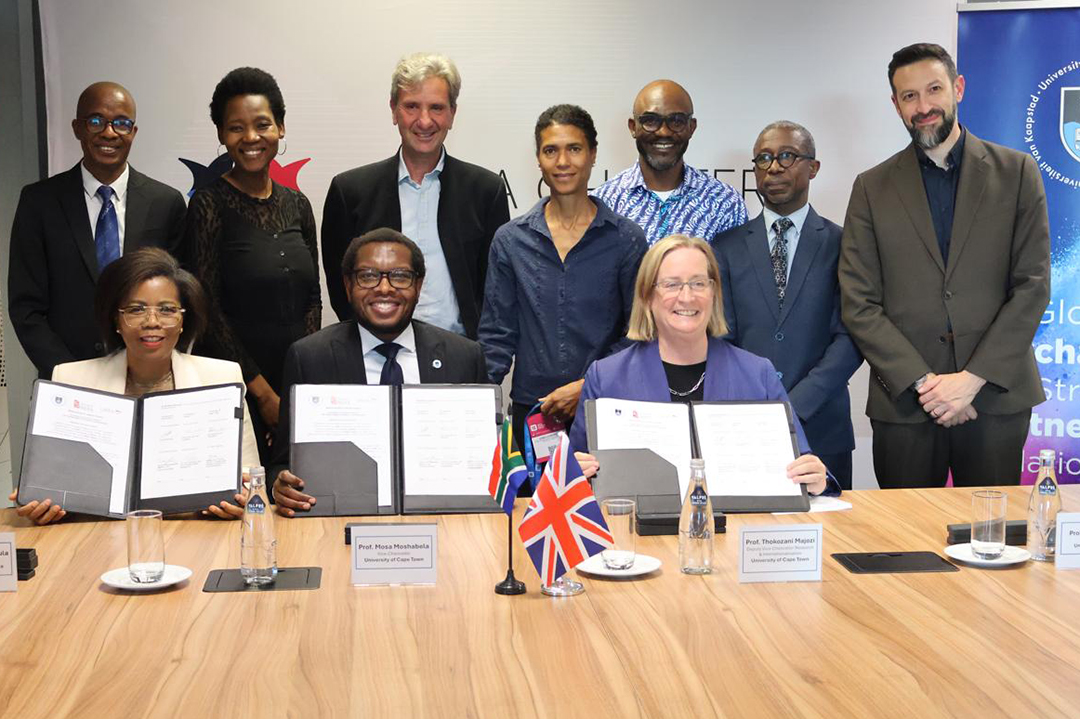 Unisa, UCT and University of Bristol strengthen partnership to transform global research collaboration
 Prof Lessing Labuschagne takes helm of Unisa's Research and Innovation portfolio
 Unisa Spring Graduation opens with stories of perseverance and achievement
 Unisa academic helps develop AI system to stay ahead of cryptocurrency scams