
During April 2026 I travelled from the east to the west of China – about 4 000 km by high-speed train. On the way I had discussions on collaborative projects with religious studies colleagues at Zhejiang University in Hangzhou and at Wuhan University. I was amazed to learn not only about their research on sacred and philosophical textual traditions (religious studies forms part of philosophy at Chinese universities), but also about their focus on material mediations of religion, gender issues, Hindu nationalism, education policy, and more.
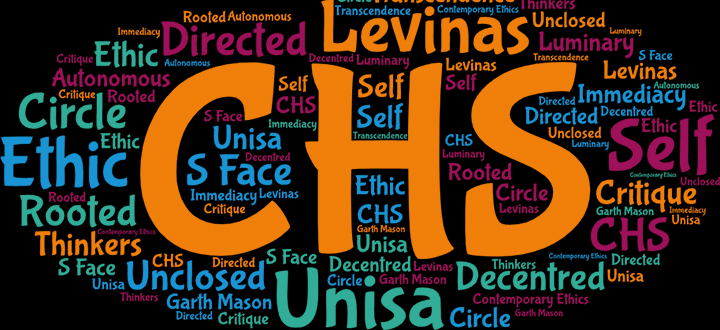
Dr Garth Mason, who teaches in the Unisa Department of Religious Studies and Arabic, recently spoke on Emmanuel Levinas's other-directed ethics, which is founded on a decentred self and the unclosed circle of the other.
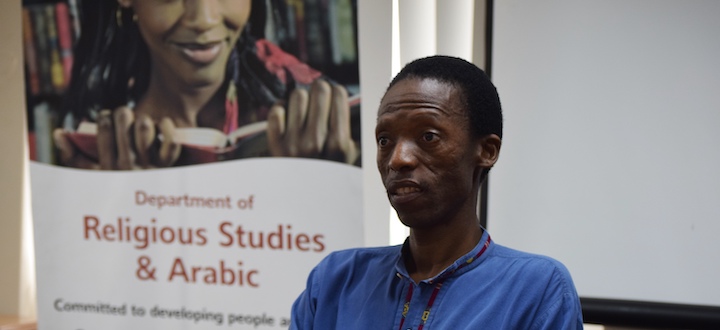
Dr Sepetla Molapo interrogates the Protestant Christian missionaries’ translation of Molimo into the Christian God among the 19th Century Southern Africa Sotho speakers. He was hosted by Unisa’s College of Human Sciences in the Department of Religious Studies and Arabic.

The Department of Religious Studies and Arabic in the College of Human Sciences hosted a symposium on Religious Studies: Past Wisdoms, Present Contestations, Future Trajectories in honour of its retiring staff member Professor Danie Goosen. Speakers included various members of the department as well as Professor Goosen’s loved ones and colleagues.
The Department of Religious Studies and Arabic teaches three disciplines, namely Religious Studies, Islamic Studies, and Arabic.
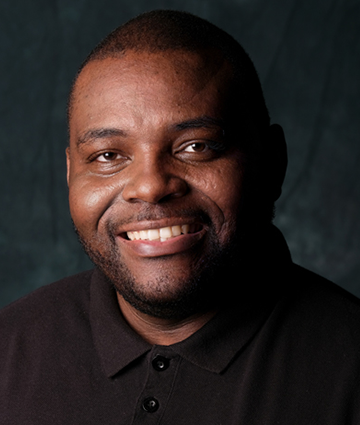
Prof Joel Mokhoathi
Chair of Department
It is my pleasure to welcome you in the Department of Religious Studies and Arabic, a vibrant division within the College of Human Sciences. Our department has a long history at Unisa, which started in 1965, when three sub-departments were established by the Department of Theology. The sub-departments were, namely: the Department of Old and New Testament; the Department of Dogmatics, Ethics, and Practical Theology; and the Department of Church History, Missiology, and the Science of Religion. That is, our department was formally known as the “Science of Religion”. In 1979, however, the university took a definitive step towards formalizing the discipline by hiring its first specialised lecturer for the subject, Prof. Jacobus S. Krüger, who shifted his academic focus from systematic theology to the Science of Religion, but still within the Church History and Missiology cluster. It was in 1981 that Religious Studies became a major subject; and in 1982, second year courses became available to students.
The official birth of the Science of Religion, as a completely independent academic department, occurred in 1986. The discipline of Religious Studies was officially "heaved off" and separated from the Church History and Missiology cluster to eliminate the structural conflicts between a Christian confessional approach and the more humanistic, naturalistic and descriptive approach to world religions. In 1992, reflecting the global trends in the Anglophone academic world to move away from the older terminology, "Science of Religion" (a translation of the German Religionswissenschaft), Unisa officially changed the name of the department to the Department of Religious Studies. In 1993, in line with structural changes, the department of Religious Studies incorporated Islamic Studies and Arabic, which were both offered under Semitics, to become the current Department of Religious Studies and Arabic. Since then, our department has been offering three disciples – Religious Studies, Islamic Studies and Arabic.
We offer a range of courses under these three disciplines, and we are proud to say that our offerings are highly contextual, are globally competitive and reflect the principles of diversity and inclusion as found in South Africa – “the rainbow nation”. We hope that you will enjoy studying with us and be enriched by our programmes. Thank you for joining the African university shaping futures in the service of humanity!
Prof Joel Mokhoathi
Chair of Department of Religious Studies and Arabic