News & Media
Addressing toxic work culture
On 12 August 2022, Prof Khehla Ndlovu, Vice-Principal: Strategy, Risk and Advisory Services (SRAS), hosted a discourse for change roundtable webinar around toxic institutional culture. The event took place under the theme Reclaiming and reimagining Africa’s intellectual futures in the aftermath of the Covid-19 pandemic.
Following a persistent toxic culture affecting the higher education sector, the selected theme was introduced to sensitise the university on toxic cultural practices that might potentially impede Unisa’s progress.
The four key objectives of the webinar were as follows:
- To share strategies, interventions and challenges around toxic culture within the portfolio.
- To present a trends analysis of the SRAS portfolio, which reflects staff equity, development and work experience issues related to Unisa transformation dimension 1.
- To highlight the stakeholders served by the SRAS portfolio and the impact thereof.
- To interrogate and reflect on the key findings and recommendations of the two South African Human Rights Commission (SAHRC) reports (2016 and 2018), and to identify strategies for supporting positive culture in the SRAS portfolio.
Ndlovu’s words of welcome detailed the work culture in his portfolio and suggestions to create a healthy working environment. "Today," he said, "we are looking forward to inputs to ensure that we improve the cultural aspect of our work."
Reflecting on the SAHRC report, Ndlovu said it is important to ensure issues on policy application, consequence management, disciplinary and the execution of outcomes are covered.
"We need to ensure that we are transforming the university," said Ndlovu. He mentioned the eight dimensions of transformation guiding the university, the five pillars in the strategy, recommendations and actions to be taken to deal with the university’s toxic culture speedily.
Perfection versus imperfection
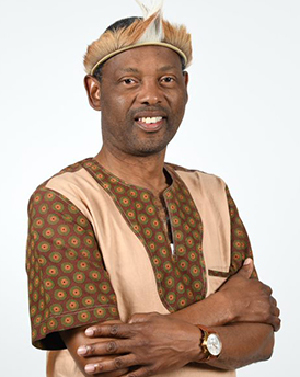
Prof Khehla Ndlovu, Vice-Principal: Strategy, Risk and Advisory Services
Ndlovu stated that it is important to leverage on both perfection and imperfection of the university’s daily activities. "We sometimes fail to get innovativeness from our people because they are scared to fail. Yet some of the businesses were developed because of failure. People are scared to be chastised." On the list of things he discussed, Ndlovu discouraged working in silos and the duplication of efforts within the university.
He also explained that the delays with the approval of portfolio structure have an impact on filling crucial vacancies. "This has resulted in increased workload on fewer specialists and thus have a ripple effect on employees ill-health and burn-out," said Ndlovu.
"We encourage people to take time off," advised Ndlovu, also stating the need for work-life balance. He believes that the university needs a staff club house where Unisans can take breaks.
In addition, Ndlovu mentioned consequence management for employees who are not performing. "We need a structured programme on staff development, wellbeing interventions and open engagements on cultural issues," he said.
Three executive directors from Ndlovu’s portfolio gave their departmental presentations on the institutional cultural trends strategies, and interventions to address challenges around the toxic culture. The departments comprise Quality Assurance and Enhancement, Legal Services, Institutional Intelligence, as well as Risk and Compliance.
Bullying was highlighted as one among many of the challenges Unisa grapples with and it was said in the webinar that it demands urgent attention. Fascinating statistics on bullying demonstrated black employees being the majority in bullying cases.
Transformation in higher education
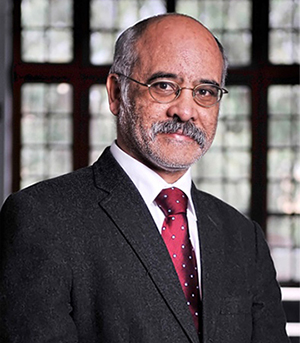
Prof Crain Soudine, Affiliated Researcher: UCT
Giving the keynote address, Prof Crain Soudine, an Affiliated Researcher in the School of Education at the University of Cape Town, said there is no sociology of higher education aside from the work of Martin Trow. "What we have done in South Africa is to adopt Trow’s eight categories." According to Soudine, universities applied what businesses and corporate used to capture what universities are all about.
Speaking of the emergence of a decolonial discourse and transforming the curriculum, Soudine said Universities South Africa (USAf) introduced a transformation barometer for the sector, but are struggling. "Some institutions will take 100 years to transform."
He said that transformation offices in universities have smaller budgets and important interventions to transform the university are unbudgeted. "Frequently there is only money that covers small interventions."
There is now pressure about democratisation. "Democratising the university is a hard thing. It is difficult to make everyone equal."
Soudine’s perspectives on governance and leadership are disheartening. He said institutional forums are by large failures of transformation.
He also said about decoloniality that there is no difference from what people did 30 years ago and now. "We have in place, good discussion going on around decoloniality, but the Covid-19 pandemic exposed the gaps between the privileged and unprivileged universities. There were big disparities. Some universities are still struggling to provide online education."
However, Soudine emphasised that language is crucial, and it remains a big issue in transformation. He advised Unisa to take advantage of good language policies and multilingual initiatives to support African languages and values.
In conclusion, Soudine said there is lack of political clarity. "We are unable to say that the South African university is moving to which direction. Few universities talk about political engagements and that is the problem when we speak about transformation."
* By Lesego Chiloane-Ravhudzulo, Journalist, Department of Institutional Advancement
Publish date: 2022/08/18

 Unisa co-hosts G20 community outreach in the Eastern Cape
 Unisans gain membership of prestigious science academies
 Unisa alumna takes the helm at the SA Library for the Blind
 Advocating for disability transformation through servant leadership
 Unisa Press continues to illuminate the publishing space