News & Media
GBV education should start at home
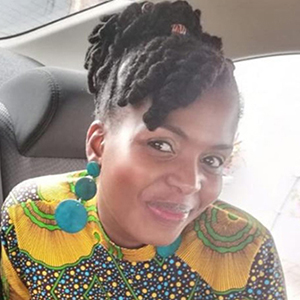
Mercy Bvuma, Lecturer in the Department of Communication Science, College of Human Sciences, Unisa
As the 16 Days of Activism for No Violence against Women and Children of 2020 come to an end, South Africa is still considered to have the highest statistics of gender-based violence (GBV) in the world, including rape and domestic violence. This is clearly a tragedy in a country where over 51% of the population is female, yet, as revealed through statistics, woman and children are killed every three hours. It seems the more this disturbing and thorny issue is spoken about, the more it continues to increase, especially now during the Covid-19 pandemic.
Considering the statistics, Unisa’s Mercy Bvuma, lecturer in the Department of Communication Science under the College of Human Sciences, believes that this remains a call for concern, especially with the growing incidence of such atrocities being committed by intimate partners or family members. It is very unfortunate that most of the perpetrators are men who are meant to protect these vulnerable groups.
According to Bvuma, one of the factors that elevates GBV is power dynamics. "It is deeply rooted in the discriminatory beliefs of culture and attitudes which more often perpetuate inequality (socio-economic) and otherwise in women, girls and primarily children. Consequently, women and children are habitually disempowered and even intimidated to talk about such abuse," she articulated.
Highlighting the importance of GBV education, Bvuma says it should start at home, where parents speak to their children about issues of "toxic" masculinity and misogyny, then proceed to school level and to larger communities, as well as workplaces, where boys and men are educated through workshops on what it dictates, and the prevention thereof.
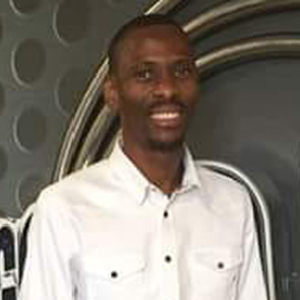
Musawenkosi Lebeloane, Broadcast Engineer, Unisa Radio
Adding to the conversation, Musawenkosi Lebeloane of Unisa Radio describes GBV as a pandemic on its own. He alluded to the fact that not much is being done to create more awareness to prevent it and yet it is too costly to ignore. For him, there is lack of social support - and poverty, inequality and alcohol and substance abuse worsen the crisis. "We had a clear proof during early levels of lockdown, where GBV cases were less until we moved levels and the alcohol ban was lifted and, as a result, more cases were reported," he says.
Lebeloane firmly believes that, among others, workshops at schools, self-education about GBV, victim-support and the use of social media to create awareness can help lower the rate of GBV in SA. He further added that social groups should be used to educate friends and families about this "pandemic". "Through education, we can beat this demon," he affirms.
Expressing her concern, Hlezi Motha of the Bureau of Market Research at Unisa says women and children in SA view male persons differently because of the ongoing violence towards them. "GBV has caused so much stir and division amongst us. Many justify their acts of violence, while others claim that it was a mistake that will never happen again. As a woman, it is very saddening to see that GBV cases do not decline," she says.
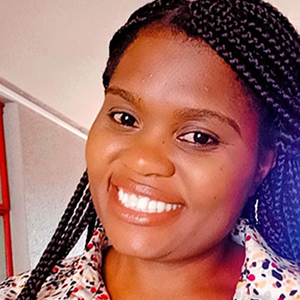
Hleziphi Motha, Bureau of Market Research, Unisa
Motha also holds the view that toxic masculinity, lack of education, and objectification of women are causes of GBV. While she thinks that SA has had enough campaigns, she feels since GBV continues daily, some male figures still need basic education on how to carry themselves around women and learn how to control their emotions.
Motha calls on educational institutions to "take up the stage" and help fight this pandemic. She also urges communities to teach and support each other, as well as to break the silence on this issue.
Bvuma concluded by indicating that SA is currently a very "broken" nation, but the idea of normalising GBV and femicide is uncultured, criminal and should be discouraged everywhere.
* By Nancy Legodi, Acting Journalist, Department of Institutional Advancement
Publish date: 2020/12/10

 Unisa co-hosts G20 community outreach in the Eastern Cape
 Unisans gain membership of prestigious science academies
 Unisa alumna takes the helm at the SA Library for the Blind
 Advocating for disability transformation through servant leadership
 Unisa Press continues to illuminate the publishing space