News & Media
Learning is like lighting a torch
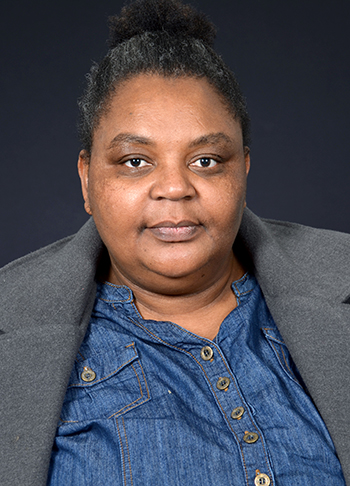 Suwisa Muchengetwa
What factors influenced you to choose this career path?
At first, I wanted to pursue a career in medicine but then I decided to pursue a career in actuarial studies. I was very good in figures, analysing and interpreting situations and the drive to know more and be predictive. However, when I started my BSc in mathematics and statistics, the drive to pursue a career in statistics overrode the career in actuarial and I found myself a statistician, which I love very much and do not regret at all.
What kind of education, training, or background?
I started with a BSc (Mathematics and Statistics), followed by a BSc Honours in Statistics, and then a Master’s in Statistics, all at the University of Zimbabwe. I managed to complete these three degrees at the age of 29 years. I also managed to attend a course in improving education systems at Harvard University, which changed me greatly in the way I analysed my statistics and data interpretation for systems improvement. I am currently doing my PhD, which I intend to finish soon.
What do you do? What are the duties/functions/responsibilities of your job?
I am a Lecturer in the Department of Statistics, School of Science, where I teach applied statistics and distribution theory. I am responsible in acquiring statistical packages for the department and also training of those packages. I am also involved in honours applications and admission and supervise honours and master’s students. Currently I have three master’s students who submitted and two who will submit at the end of year.
I am currently involved in researches involving the use of technology in learning, online learning, distribution theory, multivariate statistics and HIV/AIDS. I have also represented the college in HIV/AIDS activities. In the department I am involved in several committees which community engagement, quality assurance, tuition and admissions and applications. I also conduct workshops across the university and in regional centres, training students and academic staff in the use of SPSS, quantitative research designs, and questionnaire design.
What is a typical day like for you?
It starts as early as 3 am and finishes as late as 8 pm. This includes exercising, bonding with my children and family, and doing my work as an academic.
What part of this job do you personally find most satisfying?
When I turn data into information and indicate the drivers to a particular situation with high levels of analytic skills.
What has been the greatest challenge you have faced in your career to date?
I had difficulties in trying to finish my PHD studies when I have a heavy workload, that is, balancing my education and workload.
What kinds of accomplishments tend to be valued and rewarded in this field?
Be a good statistician, a researcher with excellent analytic and interpretative skills and a professor.
What are the major qualifications for success in this occupation?
Excelling in every aspect and being among the best.
What particular skills or talents are most essential to be effective in your job?
The ability to turn data into information and put in a sound report of the findings with high levels of analytical skills.
What is the future of the field in terms of new and expanding opportunities?
The world is having few statisticians. In every job you need a statistician, even in the church. Many opportunities are out there.
What sorts of changes are occurring in your occupation?
I am learning to be a better researcher and also the best way to interact with a distance learner in the most effective way.
Who would you say has been the most help in your career? How did they help you?
I call the people who inspired me the three musketeers. They are Prof Kgethi Phakeng, former Vice-Principal of Research and Innovation at Unisa; Prof Gugu Moche, Vice-Principal of Teaching, Learning, Community Engagement, and Student Support; and Dr Eeva Rapoo, Chair of the Department of Statistics and Senior Lecturer in the Department of Mathematical Sciences.
They inspired me and managed to send me on training on leadership, to attend the online Berlin conference, and showed me a lot of what can be done as a distance educator. They gave me a challenge to teach a course which had a low pass rate and I managed to revise the study guide and produce a workbook and I presented my findings to the whole of the college. The workbook has been shown to have a positive effect on the students. They challenged me when I entered the college and asked me what uniqueness I was bringing to the table. I managed to ensure that students learned to type their work in LaTeX and introduced several statistical packages. When I entered the university I thought of myself as a theorist but now I look at myself both as a theorist and an applied person.
How can I evaluate whether or not I have the necessary skills for a position such as yours?
Firstly you need to have the qualifications in the respective discipline. Secondly, you cannot evaluate yourself, but the people with whom you come into contact—the students, other members of staff, and the community—will assist you in knowing your skills. Teaching is also a gift and knowing that the torch is a powerful tool in darkness, where research starts, then the sky is the limit.
Can you suggest some ways a learner could obtain this necessary experience?
Learning is like lighting a torch. An effective torch tells the investigator where openings exist. The students should work hard and be good readers and book finders who discover openings in the field of knowledge search.
What exactly does the word ‘success’ mean to you?
Success is when you put measures into place and then you achieve those measures then you have succeeded. As a woman and a mother I am looking at a number of successes and the first on the line is finishing my PhD and getting a professorship. However, I do not believe in failure but have three reasons for that:
- It was not yet the time.
- Indicators of improvement
- Try again
“Let’s empower the student through open learning by talking, advising, supporting, and LISTENING, and imparting research skills to the learner. Together we can empower the Nation.”
Publish date: 2016/08/23


 Unisa co-hosts G20 community outreach in the Eastern Cape
 Unisans gain membership of prestigious science academies
 Unisa alumna takes the helm at the SA Library for the Blind
 Advocating for disability transformation through servant leadership
 Unisa Press continues to illuminate the publishing space