News & Media
Midlands Region calls upon women to collaborate
On 24 August 2022, the Unisa Midlands Region hosted a virtual Women’s Dialogue to celebrate Women’s Month, with a focus on mentoring and women in leadership, and encouraging women to collaborate and support one another.
In her opening remarks, Student Counsellor Mantoa Potjo of the Bloemfontein Regional Service Centre emphasised that women continue to be disadvantaged for historical reasons, with women tending not to be appointed to leadership roles, and with the few who do occupy such roles not benefiting from the contribution of a mentor. She stressed that we need other women to guide and mentor us throughout our careers, in that way enabling us to be better versions of ourselves. Women need to support and care for one another because there is power in togetherness: "If you want to go faster, go alone, but if you want to go far, go with others."
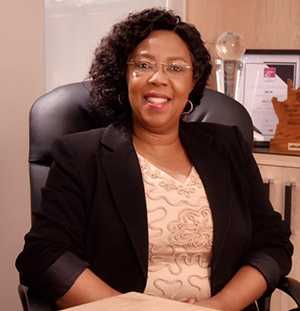
Dr Stella Khumalo, Deputy Director-General: Arts and Culture Promotion and Development, within the Department of Sports, Arts and Culture
In her presentation Dr Stella Khumalo, Deputy Director-General: Arts and Culture Promotion and Development, within the Department of Sports, Arts and Culture, outlined how to choose a mentor, the qualities of a good mentor and the mentee’s responsibilities within the mentoring relationship. She explained that mentoring is a relationship between two individuals with experience and knowledge that can be acquired and shared within a specific field. It is a voluntary journey embarked on by the mentor and mentee, and has the potential to last a lifetime due to its personal and informal nature. "No matter your stage, both mentor and mentee can be valuable resources," she said. Some of the mentoring benefits Khumalo identified include exposure to new perspectives, increased self-confidence, and the development of communication and leadership skills.
Women are encouraged to plan their journey, by determining where they are currently, and where they are going, and then exploring various routes to arrive at this destination. The mentor and mentee need to develop a trust relationship governed by a code of ethical conduct and characterised by professionalism; this could extend to signing an engagement contract that would include confidentiality clauses and pertinent conditions. Khumalo drew the audience’s attention to some of the key elements of mentoring, namely providing advice and guidance based on experience and expertise, sharing knowledge, unlocking someone’s potential, skills development, career progression and advice to mentees. "As mentors, ensure that there is value imparted to a mentee," she urged.
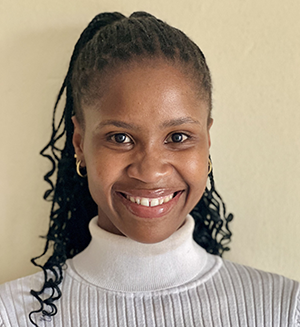
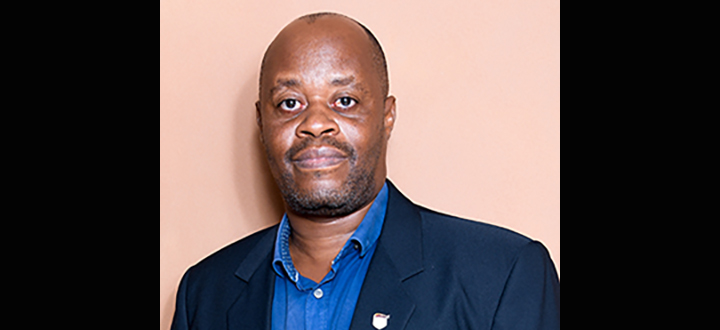
Ziyatandwa Mdoyi, Unisa lecturer in the Department of Sociology
Ziyatandwa Mdoyi, lecturer in the Department of Sociology at Unisa, described mentoring as a process of having selected and trained individuals provide guidance, advice and support that will help those being mentored in their learning and development process. This process has the potential to assist employees and students as future academics, and further calls for collaboration with the department for those requiring mentoring.
Important aspects of mentoring include helping someone clarify and achieve their goals, helping them to find the right path and facilitating their progress along that path. Mdoyi emphasised that in the mentor-mentee relationship, the mentor is responsible for offering wisdom, advice, support and professional feedback; however, the mentee has a responsibility to take action to achieve the desired growth, to be accountable and to be open to feedback. Mentoring is a source of support and guidance, empowerment and inspiration, as well as the knowledge and skills shared by the mentor with the mentee. The mentor should therefore be available to motivate and encourage the mentee through sharing experiences and draw the mentee out of their comfort zone by minimising doubts and maximising confidence. This will improve performance, stimulate growth and enhance healthy work relations, ultimately yielding a positive learning experience for both mentor and mentee.
Unisa lecturer in the Department of Psychology, Gloria Makhuza, explained that mentoring can take place informally in the home, often between parent and child, and in most instances between father and son. She noted the extent of the marginalisation and discrimination that women have endured in the past; during the 20th century, women were deemed invisible, relegated to the domestic setting, and largely excluded from participating in economic activities outside their homes, as these were deemed to be the male domain, since women were prevented from acquiring the skills that would gain them entry into the job market. During the 21st century, however, women have joined the industrial economy to an increasing degree, while in many cases simultaneously being the sole earners in their families. The reality of the 21st century is that, as in the past, a number of women continue to be responsible for duties in the home in addition to other economic activities.
Mentoring is multifaceted; therefore, women are encouraged to discover their potential, to identify mentors to guide, and support them on their journey to being what they aspire to be, as well as to know how to overcome the difficulties they encounter. Makhuza urged women to collaborate and share knowledge and skills to achieve specific goals.
In closing, Manager, Student Administration Services and Funding, Kedibone Thantsha thanked the presenters and participants for the vibrant and interactive session and again emphasised the historical plight of women, in that, society expects women to behave in a certain way that is no longer relevant. Women are encouraged to review their plans and make every effort to achieve the goals that they set for themselves. The relationship between mentor and mentee should be both intentional and directional. She reminded the audience that women are good at collaborating, and that there is no need to work and do things in isolation: "There is power in togetherness; together we rise, and let’s remember to hold each other by the hand."
* By Thotogelo Masenya, Communication and Marketing Officer, Midlands Region
Publish date: 2022/09/19

 Unisa co-hosts G20 community outreach in the Eastern Cape
 Unisans gain membership of prestigious science academies
 Unisa alumna takes the helm at the SA Library for the Blind
 Advocating for disability transformation through servant leadership
 Unisa Press continues to illuminate the publishing space