News & Media
Reflections on the 11th Annual Neville Alexander Memorial Lecture
The 11th Annual Neville Alexander Memorial Lecture, held in Cape Town on 15 November, was a poignant celebration of the life and legacy of Dr Neville Alexander. A native of Cradock, Alexander was not just a political activist and educationist; he was a fervent advocate for multilingualism in South Africa.
The event, as described by Prof Edith Phaswana, Programme Director and Director: Academic Programmes, Thabo Mbeki African School of Public and International Affairs at Unisa, aimed to generate discourse on Alexander's ideals and foster intellectual dialogue on multilingualism, educational systems and curriculum transformation.
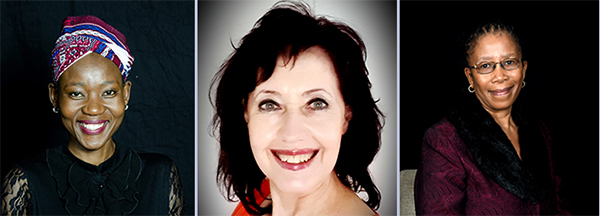
Pictured at the lecture are (from left) Prof Edith Phaswana, Prof Vuyokazi Nomlomo, Prof Tintswalo Manyike, Prof Stanley Madonsela, Prof Nkidi Phatudi, Michelle Frauendorf and Dr Benie Lekubu
A decade of progress
As Phaswana highlighted, this annual event has matured over a decade, evolving into one of Unisa's flagship occasions. The 11th lecture provided an opportunity to reflect on the progress made, especially regarding the use of indigenous languages as tools for curriculum transformation. Alexander's central belief, as expressed by Michelle Frauendorf, Acting Regional Director of Unisa’s Western Cape region, and host of the event, was that using indigenous languages in education would dismantle the bias toward an English-speaking elite.
Remembering a visionary and humble mentor
Prof Vuyokazi Nomlomo, Deputy Vice-Chancellor of Teaching and Learning at the University of Zululand, delivered the keynote address. She eloquently portrayed Alexander as a visionary and humble mentor. She traced his life from Cradock to Robben Island, emphasising his commitment to linguistic diversity. Her lecture delved into Alexander's critical contributions, particularly his proposal for mother tongue based bilingual education as a means to achieve universal primary education and linguistic liberation.
Keynote speaker, Prof Vuyokazi Nomlomo
Nomlomo further explored Alexander's insights into language dominance and hegemony, shedding light on the socio-economic and cultural implications. She highlighted the parallels with historical colonial experiences, emphasising the need to challenge linguistic imperialism and promote linguistic equality.
Curriculum transformation and epistemological shift
Nomlomo delved into the persistent challenge of English hegemony in post-apartheid South Africa. The #RhodesMustFall and #FeesMustFall movements highlighted the need for curriculum transformation, questioning not only Eurocentric ideologies but also the role of marginalised languages in higher education. The lecture posed critical questions on how to achieve true curriculum transformation.
Nomlomo argued that Alexander's aspirations for curriculum transformation remain elusive without recognising and including indigenous languages. It acknowledges some university initiatives but stresses the need for collaboration and a cohesive language transformation landscape. The role of research in African languages is emphasised, along with initiatives like the Community of Practice for the Teaching and Learning of African Languages project.
A dream deferred?
Nomlomo reflected on the incomplete dream of curriculum transformation without the recognition of indigenous languages. It underscores the necessity of epistemological transformation and language inclusion. Alexander's passion for linguistic diversity serves as a guide for ongoing curriculum transformation, ensuring that indigenous languages thrive, honouring his legacy for generations to come.
The keynote address was followed by a robust question and answer session, fielded by a panel comprising of Prof Tintswalo Manyike, Chair of Department: School of Teacher Education, Unisa; Prof Nkidi Phatudi, Former Head of Department: Early Childhood Education, Unisa, and Prof Stanley Madonsela, Chair of Department: African Languages, Unisa. They fielded questions and comments such as the lack of resources available to schools in disadvantaged areas (where mother tongue education is possible) to how far Unisa has gone to promote multiculturalism to shape its students.
Delivering the vote of thanks, Manyike, who played a pivotal role in organising this year’s lecture, noted that Alexander’s pioneering work is still helping researchers to understand where we have come from and to see where we are going. She said that the evening’s discussion proved that the dream is in fact not deferred, but a dream defended, as what we are doing is trying to ensure that African languages enjoy the same space as that held by the English language.
Click here to view the lecture in its entirety on the Unisa YouTube Channel
* By Vicky-Lee Lee Shew, Acting Communication Manager, Unisa Western Cape Region
Publish date: 2023/12/04

 Unisa co-hosts G20 community outreach in the Eastern Cape
 Unisans gain membership of prestigious science academies
 Unisa alumna takes the helm at the SA Library for the Blind
 Advocating for disability transformation through servant leadership
 Unisa Press continues to illuminate the publishing space