News & Media
Tackling cyber-challenges faced by educational institutions
Considering the constraints and demands brought by the Covid-19 pandemic to which educational institutions had to adjust, Prof Veronica McKay, Acting Vice-Principal of Teaching, Learning, Community Engagement and Student Support (TLCESS), acknowledged that it required enormous flexibility on all Unisans to save the academic year. In this regard, she firmly believes that the skills possessed by Unisa academics are the right skills for teaching and learning (T&L). McKay was speaking at the official opening of the 2020 Teaching and Learning Festival held virtually by Unisa on 5 October 2020.

Prof Veronica McKay, Acting Vice-Principal: Teaching, Learning, Community Engagement and Student Support, Unisa
In the context of the Fourth Industrial Revolution (4IR) and the Covid-19 pandemic, Unisa celebrated teaching and learning with the theme "Digitally yours, Unisa". The opening address was delivered by Sipho Mogane, the Chief Operating Officer (COO) at The Heels: Skills, Training and Development Institute, where they provide adult education training (AET) to previously disadvantaged communities in partnership with sector education and training authorities (SETAs). Mogane spoke on the topic "Cyber risks for online teaching and learning".
In his presentation, Mogane said Covid-19 had forced organisations to work differently and many have had to relook at their digital transformation strategies. He added that education and technology are firmly intertwined, which presents a new set of challenges for educational institutions. Regarding cybersecurity and information security, he said every organisation needs to find the right balance and mix between confidentiality, availability and integrity.
According to Mogane, some common cybersecurity risks that educational institutions face include, among others:
- Data theft: Theft, loss or destruction of staff or student personal identifiable information.
- System disruption: Unavailability of information and communications technology (ICT) infrastructure due to unreliable electricity supply, unpreparedness of institutions for virtual teaching and learning.
- Intellectual property theft: Theft of proprietary rights on ground-breaking subjects/research.
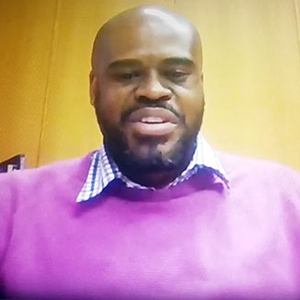
Sipho Mogane, Chief Operating Officer at The Heels: Skills, Training and Development Institute
Mogane warned the university against cyberterrorists who usually focus on disrupting critical services and causing harm. He advised Unisa to assess their critical ICT infrastructure and identify who would benefit from the disruption of such infrastructure. Among others, he warned against academic espionage and theft, hacktivists who expose secrets and disrupt services, and cybercriminals who target cash and/or data-rich organisations through ransomware.
"Educational institutions are targeted because their strength is also their biggest weakness. Generally, educational institutions have very complex ICT footprints and this, by its very nature, creates multiple vectors that can be exploited by malicious actors. There is a 'bring your own device' culture in universities where personal devices and on-the-premises devices interact with each other. Due to the Covid-19 pandemic, some on-the-premises devices have found themselves in staff’s homes, interacting with personal information technology (IT) networks. This fusion has brought about some complexities for IT departments."
Mogane recommends that educational institutions need to implement the three pillars of cybersecurity that work. "We need educated, informed and empowered employees who have been trained on how to identify cyber-threats, and to detect and report suspicious activities. Secondly, implement business or IT processes that make the institution more cyber-resilient and use strategies to proactively prevent and to respond quickly to cybersecurity incidents. Lastly, deploy integrated and automated tools, hardware and software to facilitate the rapid detection and mitigation of threats," said Mogane.
He concluded by explaining the importance of strengthening the weakest link in the cyberchain - the human - and of defining, among others, policies, standards, guidelines and best practices to manage cybersecurity risks.
* By Nancy Legodi, Acting Journalist, Department of Institutional Advancement
Publish date: 2020/10/08

 Unisa co-hosts G20 community outreach in the Eastern Cape
 Unisans gain membership of prestigious science academies
 Unisa alumna takes the helm at the SA Library for the Blind
 Advocating for disability transformation through servant leadership
 Unisa Press continues to illuminate the publishing space