News & Media
The decolonial Neville Alexander, remembered
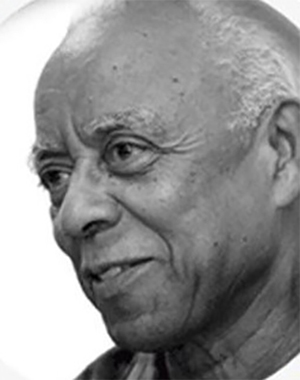
The late Neville Alexander
An incredible human being gifted beyond measure, committed and rooted in the daily struggles in the effort for freedom and liberation in South Africa – this is how Prof Puleng LenkaBula, Unisa’s Principal and Vice-Chancellor (VC), characterised the late Neville Alexander.
She was speaking at the ninth Neville Alexander Memorial Lecture held on 1 October 2021, the month and year he would have been 85 years old. The virtual event was organised by Unisa’s Western Cape Region.
Entitled Neville Alexander and the Struggle for Education, Nation-Building and Liberation, this year’s memorial lecture focused on the decolonial Alexander who fought so hard to equalise and humanise education for the betterment of all.
Widely known as an anti-apartheid activist, an intellectual and an educationalist who contributed immensely to South African democracy, Alexander also contributed to linguistic diversity and multilingual education – issues regarded as important and demanding urgent attention today.
Citing Amilcar Cabral, the VC described Alexander as a lifelong educator, teacher and social justice activist who was an embodiment of the quest to humanise the education system, allowing people to bring their languages, their talent and the diversities of knowledge systems into the arena of democracy and freedom.
"Above all," she added, "his belief in the power of education to shake up the status quo was unthinkable yet very unshakable for he was resolute around agitating for education as a liberatory if not an emancipatory practice."
Valiant narratives
"He carried his belief from his place of birth in Cradock right up to his death in 2012 in Cape Town," said LenkaBula in her welcoming speech.
"It is telling that he was born in Cradock, a town that has come to be known for the Cradock Four."
The Cradock Four were a group of four anti-apartheid activists who were abducted and murdered by South African security police in June 1985. "Though theirs was a story of tragedy, a story of paying the ultimate price for the fight for freedom, it is also a story that reminds us of the interconnected between the narratives of those who fought so valiantly for our freedom and democratic gains that we currently enjoy," said the VC.
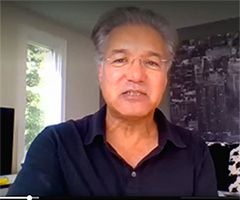
Prof Salim Vally, Director at the Centre for Education Rights and Transformation, UJ |

Professor Puleng LenkaBula, Unisa’s Principal and Vice-Chancellor (VC). |
Presenting his introductory remarks, Mathews Kokong, Regional Director of Unisa’s Midlands Region, highlighted the importance of this event: "The university is privileged to host a number of memorial lectures every year honouring the achievements of great women and men who contributed to the South Africa we live in today. As the years pass, their families, friends and colleagues who knew them intimately also get fewer and fewer – and it is our duty to ensure that those voices are heard and put on record so that the legacies of those people we honour never get lost."
A hopeful optimist
Prof Salim Vally from the University of Johannesburg, who is the Director of the Centre for Education Rights and Transformation and NRF SARChl Chair in Community, Adult and Workers Education, delivered the lecture. Vally views Alexander as someone who could not reasonably withdraw into the insular existence that many in his position might find tempting and modifying. "Yet, despite, or perhaps because of, how infuriating it might have been to see things as clearly as he did when others did not, Alexander was hopeful and optimistic about what could be," he said. "An uncanny ability to predict South Africa’s political trajectory made Alexander unpopular with members of the post-apartheid ruling establishment who were often unsettled by his critique of the dominant, largely celebratory discourse of national liberation, and Neville of course felt it should correctly be called nationalist liberation."
But still, Vally added, "Alexander was deeply respected even by those he criticised. Respect was earned partly because of his modest and humble lifestyle in an environment of Everest. Alexander, without even saying anything, was the consciousness of many of the elite but also because of Alexander’s dignified humanistic and the principle positions he took on all issues and practices."
According to Vally, Alexander viewed pomp, ceremony and ostentation with disdain. He was certainly not impressed by titles and status. He preferred to be simply called Neville or comrade Neville.
Contribution to education and nation-building
Vally said Alexander’s scholarship was deeply engaged with the practical world around him. "In fact," he said, "Alexander was critical of the pretence of impartiality and the aloofness of the scholars. His approach was the idea of concrete alternatives and demonstrable possibilities in the present, and his was the approach that went beyond social critique. He always viewed societal contribution inseparable from serious scholarly activity."
Vally continued: "Alexander’s scholarly writings, speeches and organisational activities were wide-ranging. His specific contribution to the general broad field of education requires serious study today because many things, like his suggestions, alternatives, were not taken up or fully developed during his lifetime. These included a whole range of interventions such as promoting early child development, literacy, reading clubs, multilingualism, programmes between school and university, the importance of teaching African history and the redefinition of community."
In conclusion, Vally said that, Alexander was a decolonised scholar even before the phrase became popular.
* By Lesego Chiloane-Ravhudzulo, Journalist, Department of Institutional Advancement
Publish date: 2021/10/14


 Unisa co-hosts G20 community outreach in the Eastern Cape
 Unisans gain membership of prestigious science academies
 Unisa alumna takes the helm at the SA Library for the Blind
 Advocating for disability transformation through servant leadership
 Unisa Press continues to illuminate the publishing space