News & Media
Unisa’s internationally renowned biblical scholar celebrated by fellow scholars
The legacy of Professor Madipoane Masenya (Ngwan’a Mphahlele), an internationally renowned scholar from the University of South Africa (Unisa), was celebrated by her fellow scholars from 43 countries across the world during the 2023 International Meeting of the Society for Biblical Literature (SBL), held at the University of Pretoria (UP) on 3-7 July 2023.
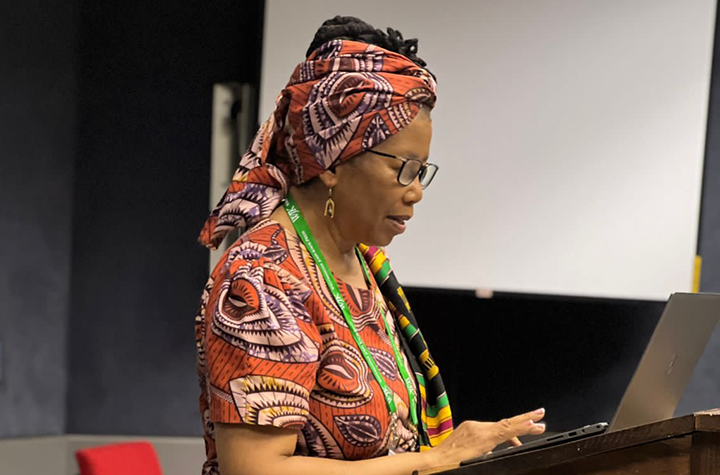
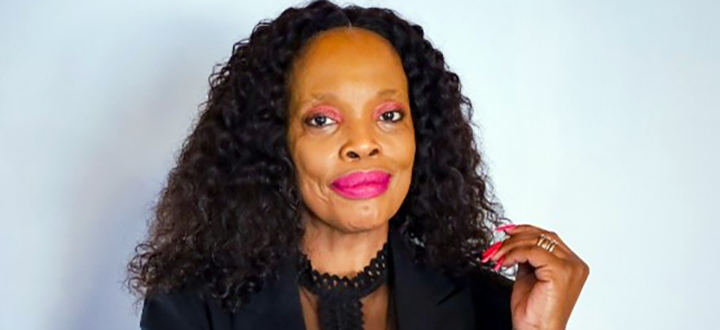
Unisa’s Professor Madipoane Masenya, Executive Director: Office of the Principal and Vice-Chancellor
The SBL, founded in 1880, is the oldest and largest learned society devoted to the critical investigation of the (Christian) Bible from a variety of academic disciplines. The society offers its members opportunities for mutual support, intellectual growth, and professional development.
A special session sponsored by the SBL’s Committee on the Status of Women in the Profession critically engaged Professor Masenya (Ngwan’a Mphahlele)’s contributions to the fields of African Biblical Hermeneutics and Feminist/Womanist Scholarship of the Hebrew Bible.
The scholars shared rave reviews of Professor Masenya (Ngwan’a Mphahlele)’s work and legacy, affirming her stature as one of South Africa’s most esteemed biblical scholars, who can be rightly described as a trailblazer who, through many years, has developed and applied her Bosadi (womanhood-redefined) approach to reading the Hebrew Bible/ Old Testament.
Participating in the session as discussants were Professor Juliana Classens (Stellenbosch University), Professor Hulisani Ramantswana (Unisa), Dr Lerato Mokoena (Unisa) as well as Professor Masenya (Ngwan’a Mphahlele) herself.
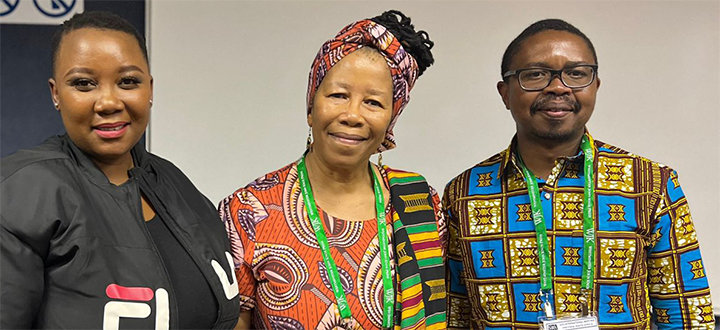
Prof Madipoane Masenya (middle) with two of the discussants, Dr Lerato Mokoena (left) and Prof Hulisani Ramantswana (right), both from the Department of Biblical and Ancient Studies, College of Human Sciences, Unisa
In his paper, titled “A mother of Black Old Testament Scholarship in South Africa: Yo Aneng a Swere Thipa ka Bogaleng (The One who Held the Knife at Its Sharp End)”, Professor Ramantswana shared this perspective:
“What Professor Masenya gave birth to in the framing of the Bosadi approach now lives beyond her, and as it lives on, it will evolve, be reevaluated and reframed. Professor Masenya’s cry, unlike Rachel’s cry, whose cry could not be comforted because her children were no more, the empire has not aborted the lives of her scholarly children. Her scholarly children are alive here in South Africa and elsewhere in the African continent.”
Dr Lerato Mokoena, in her paper titled “scenes of Abjection: The Bosadi Theology of Masenya Madipoane (ngwana’a Mphahlele)”, shared the following:
“Within the struggle for absolute autonomy, where prevailing narratives have failed to represent the realities of black people and women, Bosadi has sufficed to offer an alternative and become a placeholder. It is no doubt that Masenya's work will continue to influence and shape the worldviews of many upcoming young theologians. Her work represents critique for critical times and will forever remain relevant since we are in a constant state of impoverishment and a world that constantly needs vital analysis.”
* Article compiled by Martin Ramotshela, Director: Office of the Principal and Vice-Chancellor
Publish date: 2023/07/07

 Unisa co-hosts G20 community outreach in the Eastern Cape
 Unisans gain membership of prestigious science academies
 Unisa alumna takes the helm at the SA Library for the Blind
 Advocating for disability transformation through servant leadership
 Unisa Press continues to illuminate the publishing space