News & Media
Unisan's powerful memoir empowers GBV victims
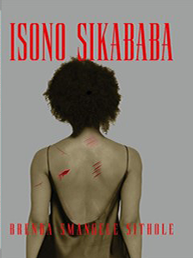
The cover of Isono Sikababa
Unisa staffer Brenda Smangele Sithole’s book titled Isono Sikababa (Sins of the father) is dedicated to victims of gender-based violence (GBV) and rape, and was crafted from some of her personal experiences traversing through painful circumstances that she ultimately conquered. We sat down with Sithole to learn more about her background and what moved her to pen this unique work.
Sithole is from uMzinyathi outside Inanda to the north of Durban. She was born and bred in Nkandla, a small rural village, and now resides in Pretoria. She works at Unisa as an applications officer in the Department of Student Administration and Registration.
Sithole holds several academic qualifications, including an Honours Degree in Integrated Organisational Communication from Unisa, and is currently studying towards a Master of Information Technology ICT (Information and Science) at the University of Pretoria.
She has recently published a book in IsiZulu, titled Isono Sikababa (Sins of the father), which details a young girl’s agonising past filled with harrowing events. Ultimately, the girl finds the path towards healing and success. Sithole hopes the vivid accounts in the book will assist in healing the wounds of GBV violence and promote reconciliation between individuals born from rape and their families.
Troubled past

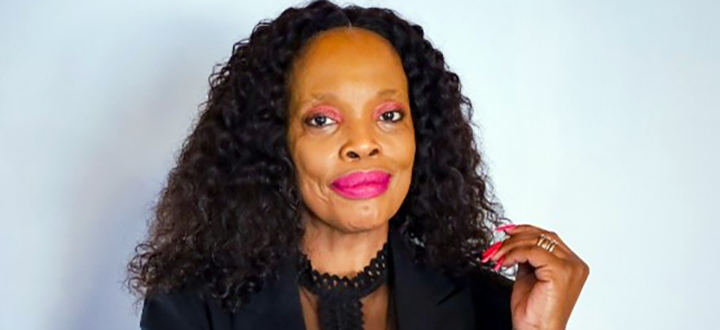
Author Brenda Smangele Sithole
A budding poet and author, Sithole says her novel-turned-memoir is based on her experiences. It chronicles the life of a young girl who is labelled an illegitimate child throughout her life as a result of several factors, which include being born out of wedlock through rape. This drives her towards depression and she battles constant suicidal thoughts.
The girl struggles to live happily with her father’s family. She finds it hard to forgive her father because he raped her mother. The girl expects to find comfort in her mother, who instead constantly rejects and subjects her to pain, mainly because she, too, has not healed from the emotional trauma she suffered after being raped at a very young age.
Describing the title of the book, Sithole says it came from wondering whether she was being punished for her late father's sins by her family and whether it is because her father raped her mother, who was 14 years old at the time of the incident. She adds: "It all made sense to me that my family, including my mother, have not forgiven my late father and now they see him through me. They don't see a blessing from God but a sin – a cursed child who came into the world through rape."
Between a rock and a hard place: Sharing personal stories
Sithole says while writing, she had to pause and hold back tears as she recounted her past. She says she disliked the idea of the book going public, and feared that it might divide her family or make it seem that she is shaming family and ruining family, as not everyone will see her point of view in sharing her personal story with the world. "But I found comfort in knowing that it's the complete truth and I own the story," she explains.
Sithole says she wants readers to learn from the events that shaped her into the person she is today. "I wanted to empower women to stand up and face all types of gender-based violence. I know somewhere in South Africa, women are being forced to do things they don't want to do, while a child is afraid to be at home at night because he/she fears the 'monster' inside the house," she adds.
Sithole says she is currently self-marketing the book and a copy can be requested by reaching out to her on social media. Her desire, she adds, is to reach a wide and diverse audience, "so they may understand that they are not alone in this journey and that it is conquerable".
Some of Sithole's wishes of the book is that it will
- lay bare all the challenges faced by some children who were conceived through rape and mothers who have been the victims of this heinous crime.
- speak to men and shed light on the significance of thinking through their decisions on sexual matters.
- give a glimmer of hope to children conceived through rape who constantly face rejection, which leaves them vulnerable.
- speed up the healing process for those rape victims who have already embarked on a journey of putting their lives together as a way of forgiving and accepting the situation.
* Interview by Boikanyo Moremedi, Editorial Assistant, Department of Institutional Advancement
* Compiled by Godfrey Madibane, Acting Journalist, Department of Institutional Advancement
Publish date: 2022/12/15

 Unisa co-hosts G20 community outreach in the Eastern Cape
 Unisans gain membership of prestigious science academies
 Unisa alumna takes the helm at the SA Library for the Blind
 Advocating for disability transformation through servant leadership
 Unisa Press continues to illuminate the publishing space