

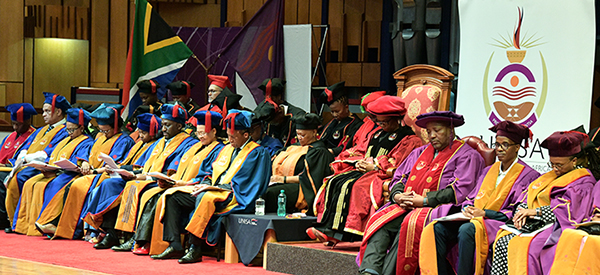
DTSFL's leadership with Unisa’s adjunct academics
Unisa's Department of Tuition Support and Facilitation of Learning (DTSFL) recently hosted an adjunct academics mid-year check-in session to explore academics' reflections and experiences from the beginning of their appointment to date.
The discussions, held on 6 July 2026 at the university's Muckleneuk Campus, highlighted the successes achieved and the challenges faced in the early stages of the project, thereby setting the tone for the next phase.
In February 2026, Unisa appointed a large number of adjunct academics to strengthen the university's academic project and to build the next generation of academics. The recent meeting proved vital for understanding early implementation experiences and for tuning up for the project’s next level, as the programme continues to shape its identity.
Kickstarting the reflections, Dr Phumza Makgato-Khunou, Director of Institutional Support and Services, indicated that a survey was conducted to encourage academics to voice their views, to which they responded positively by actively participating without reservation. Reflection questions covered immediate training needs, pain points, long-term training needs, what is working, what is improving, and what is uncertain, as well as office space assigned, among others.
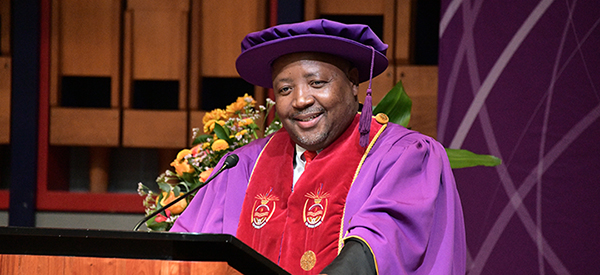
Dr Phumza Makgato-Khunou, Director of Institutional Support and Services
According to Makgato-Khunou, the tone of the experience reflections was overall positive, detailing improvements in resources, operational competence, and teaching confidence. "The foundation is encouraging. The next phase should convert early goodwill into academic development and sustainable working conditions," she remarked.
Discussing the pain points, she stressed that the marking load was the strongest recurring theme, with a few academics commenting that "the marking load is heavy" and that they are often "being treated more as a marker than an academic". Makgato-Khunou cautioned: "Workload pressure risks narrowing the programme to assessment support rather than academic development."
Continuing, she noted that the most cited long-term training needs included an academic pathway designed to assist in writing, publishing, researching, supervising, and developing an academic identity.
Speaking next, Dr Jabulani Nene, Head of the Centre for Professional Development, acknowledged the unique experiences, knowledge, and potential brought by each academic. "Together, you became part of something remarkable, a community committed to teaching, learning, scholarship, and student success," Nene commended.
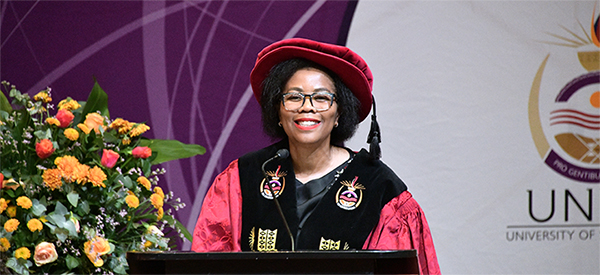
Dr Jabulani Nene, Head of the Centre for Professional Development
He further implored the academics to pause and reflect on the strategies that have helped them cope with the demands of being adjunct academics. For him, balance is not a luxury but a necessity. "Thriving means creating harmony between teaching and learning, research and scholarship, student support and service, and personal wellbeing," Nene maintained.
Lastly, Nene reaffirmed the DTSFL's commitment to listening to the academic's voices, developing their potential, innovating together with them, and growing as a community.
Notably, during a question-and-answer session, the aspiring professors echoed the grievances reported earlier while expressing their gratitude to the administrative staff and academic leaders for their supportive role since the initiative's inception. Additionally, various academics from different Unisa colleges ascended the stage to discuss specific challenges related to their colleges. Equal to the task, relevant Unisa personnel were present to outline the necessary measures taken to tackle the issues.
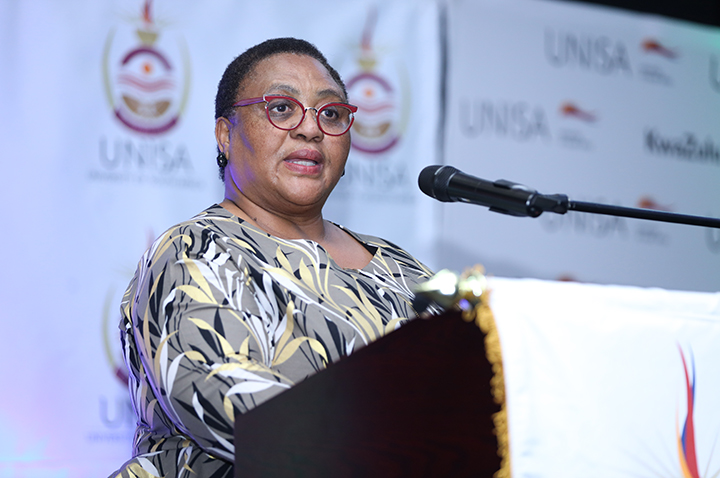
Concluding the session, Prof Meahabo Magano, Executive Director of DTSFL, called for a more coherent approach across the institution, entreating department chairs to share best practices to improve the project holistically. Turning attention to the adjunct academics, she lauded their efforts in resolving the marking and tutoring issues previously experienced at Unisa. She reassured them that they are not "glorified markers" but highly esteemed academics with opportunities to grow in the institution.
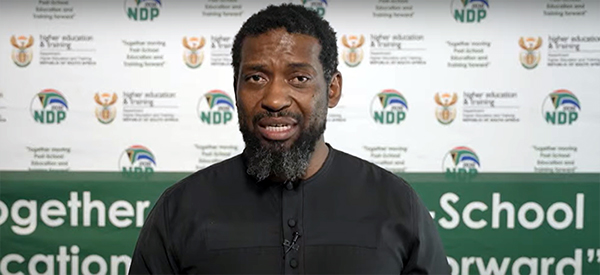
Prof Meahabo Magano, Executive Director of DTSFL
The next phase of the adjunct academics' programme will focus on creating a suitable academic development pathway for participants.
* Article and photography by Victor Malatji, Journalist Intern, Department of Institutional Advancement
Publish date: 2026/07/14

 Unisa strengthens global standing in 2027 Times Higher Education World University Rankings
 Unisa, UCT and University of Bristol strengthen partnership to transform global research collaboration
 Prof Lessing Labuschagne takes helm of Unisa's Research and Innovation portfolio
 Unisa Spring Graduation opens with stories of perseverance and achievement
 Unisa academic helps develop AI system to stay ahead of cryptocurrency scams