News & Media
VC's Summit ventilates optimised strategy, reskilling and student-centeredness
On day two of the university’s open platform for collaboration and innovation, academics, support staff and student representatives continued to discuss ways of improving the university's core functions and its commitment to the academic agenda.
Structure must follow strategy
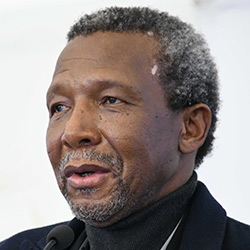
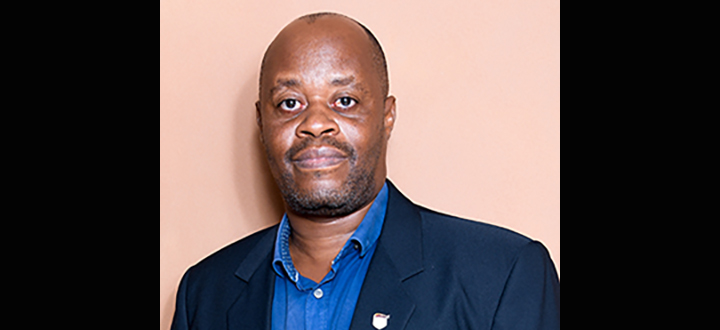
Prof Solomon Magano, Acting Vice-Principal: Institutional Development
Prof Solomon Magano, Acting Vice-Principal: Institutional Development, presented his points on the theme Building a fit for purpose organisation, an analysis of where we are and where we are headed to. Magano’s central message was that structure should follow strategy and not the other way around.
This he underpinned through the employer employee transaction, stating that the employer compensates employees when they bring in the right qualifications and skill sets to help the organisation execute its strategy. "But oftentimes," he said, "the scale is compromised when the employee does not deliver proportionately to the requirements. However, he said for efficient optimum outputs, the scale must be balanced between employer and employee, and this is what he aspires to for the university’s structure and strategies going forward."
Reskilling and multiskilling as interventions
Magano stated that in order for the structure to properly align with strategy, there is a need to reskill employees where possible. And for those impacted by the shift towards online examinations, he said, they were redeployed to various environments within the university, and were given psycho-social support and basic IT skills capacitation in order to fulfil the strategy of the university.
In addition, Magano hinted at the idea of having academics deployed to regional centers, "so that when students want to engage with lecturers, they will find them in the regions". This, he said, is a fundamental and a transformative effort. For this to happen, Magano stated that management should reserve some of the academic sector appointments or positions for regional centres.
On the workforce data, Magano remarked on the upward movement of staff who obtained their PhDs. He explains: "As of June 2023, the total number of the university’s employees stand at 6904, with permanent employees making up 83% (5698) while those on fixed-term contracts accounting for 17% (1206)." He stated that the number of academic staff is at 31% (1794), and that 59.75% of them have PhDs. And in terms of college-specific figures, a total of 80.8% of the College of Education staff have PhDs, followed by the Colleges of Accounting and Economic Sciences with a 67.7% total. He continued to encourage staff to work towards PhDs in order to fulfil the academic agenda of the university, and to have the structure of the university align with its envisaged strategy.
Access to enablers of learning central to student success
Clarence Mabutla, Unisa student and member of the Limpopo Regional Student Representative Council (RSRC), who was representing undergraduate students, presented a list of student needs, which he said are pivotal to their success. Mabutla asked that management make available computer literature lessons to first-time university students. He suggested that the university opens campus and computer labs over the weekend, including points of student enquiries to make this possible.
With regards to the National Student Financial Aid Scheme (NSFAS) making late payments to students, Mabutla, stated that the university should pay students their allowances. He explained: "While NSFAS is known to pay some students tuition fees late, we ask that Unisa give us allowances in advance, and NSFAS will reimburse the university later in the year."
Mabutla noted the unemployment concern of students, and he suggested that the university’s various colleges should collaborate with both national and international organisations so that students can easily obtain bursaries and work-related experience that could lead to potential employment.
Furthermore, Mabutla applauded the university’s firm rules on plagiarism, stating that the use of ghost-writers for writing assignments puts students at the risk of not only being caught, but it compromises the stability of their qualifications. He added: "This proves that the university is committed to the elimination of fraud, and that it will not compromise its high-quality teaching and learning agenda."
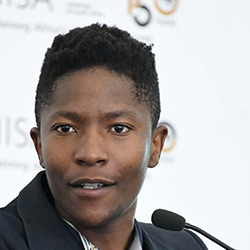
Clarence Mabutla, Unisa student and member of the Limpopo RSRC |

Director of the Teaching and Learning Strategy Project and Portfolio Performance, Prof Goonasagree Naidoo |
Postgraduate education, a catalyst for national development
Director of the Teaching and Learning Strategy Project and Portfolio Performance, Prof Goonasagree Naidoo, speaking on Tertiary education, the main driver of the education revolution, stated that postgraduate education is a catalyst for national development and poverty elimination.
Naidoo said the national government recognises that in order to solve the country’s complex problems, education and training of the people are essential and require a specific focus. Naidoo outlined some of the plans contained in the National Development Plan (NDP) 2030, which include the increase of PhD qualified staff in higher education from 34 to 75 percent, and to produce more than 100 doctoral graduates per million per year – both by 2030.
She further explained that with the economy becoming more knowledge intensive, people would need to be educated and trained in skills not only for employment, but also to produce new knowledge to equip people to deal with the changing economy and to open up a range of opportunities.
Closing the gap between teacher and students
"However," said Naidoo, "the NDP targets are quite arduous, because of a range of issues, including poor relationships between postgraduates and their supervisors, that is, inadequate and sporadic supervision, which often lead to students dropping out. In addition, there is the student-supervisor imbalanced ratio, while on the other hand, supervisors complain that their students lack research skills and funding, and that academic staff are being put under pressure to produce PhD students. The increase workload pressure could negative result on the equality of graduates and supervision."
Naidoo said to mitigate these factors, there needs to be effective supervision, which, she said, is a key determining factor for students to successfully complete their PhDs. She additionally suggested the use of online student-supervisor matching systems that can match the right supervisor with the right student using rigorous variables.
Consequence management necessary for accountability
For successful student service delivery, said Prof Tennyson Mgutshini, Acting Executive Director: College of Graduate Studies, there is a need for academics to carry their weight and do timeous good to students under them. "We cannot say that the problem is the structure, when the wheels of the structure are not moving," he continued.
"There is a culture that needs to be eroded, that of getting the rewarded first before you do the work. This warrants a flexible consequence management," said Mgutshini. He stated that once the university revisits such causal relationships, the whole business will automatically fix itself.

Prof Tennyson Mgutshini, Acting Executive Director: College of Graduate Studies |
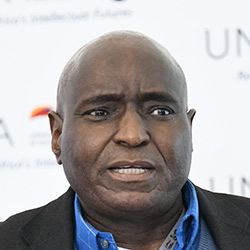
Mathews Kokong, Acting Deputy Registrar |
Registration dates should stick
Mathews Kokong, Acting Deputy Registrar, acknowledged the limited capacity in catering for students with disabilities. He said that the university’s regions have established disability centres, and that some of them are well equipped while others are not. "They lack the human resources to drive them," he explained, and said that at the moment they are working on inclusive strategies through engaging the university’s Advocacy and Resource Centre for Students with Disabilities (ARCSWiD) to assist.
With regard to staff being overwhelmed with outputs on processing and finalising student registrations and other pertinent issues timeously, Kokong recommended that registration dates should not be extended, adding that they have domino consequences further up the chains of operations which further fuel students’ frustrations, through, for example, the late release of student assignment and exam results.
Read also:
Commitment to the academic agenda central to VC's Summit
#Unisa150
* By Godfrey Madibane, Acting Journalist, Department of Institutional Advancement
Publish date: 2023/07/24


 Unisa co-hosts G20 community outreach in the Eastern Cape
 Unisans gain membership of prestigious science academies
 Unisa alumna takes the helm at the SA Library for the Blind
 Advocating for disability transformation through servant leadership
 Unisa Press continues to illuminate the publishing space