

Every morning as a young boy growing up in the rural village of Ga-Maloto near Alldays in Limpopo, Masilo France Machaba walked nearly 15 kilometres to school, often barefoot. His classrooms were built from brick and mud, with leaking corrugated-iron roofs, broken windows and few learning resources.
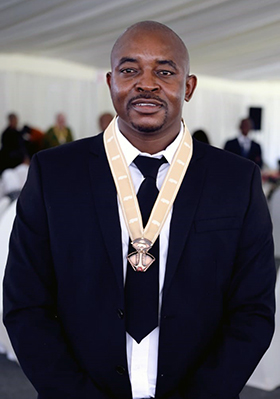
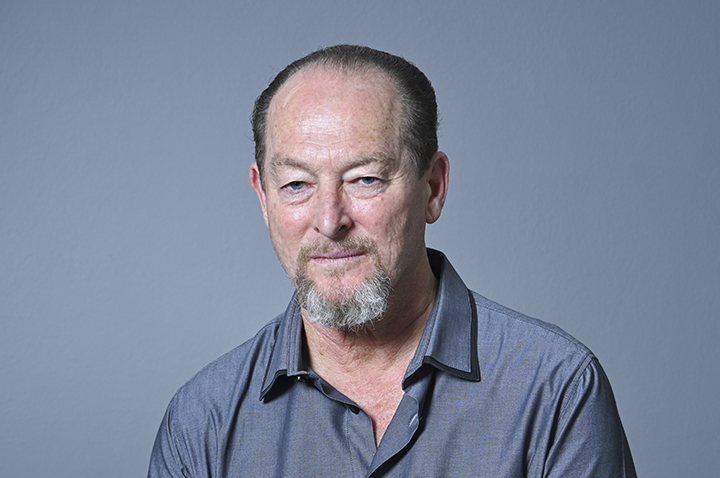
Prof Masilo France Machaba
Decades later, that same boy has become one of South Africa's foremost mathematics education researchers and has been appointed the National Research Foundation (NRF) Decadal South African Research Chairs Initiative (SARChI) Chair in Big Data and Mathematics Education in Unisa's College of Education (CEDU).
The appointment, announced by the Minister of Science, Technology and Innovation, Prof Blade Nzimande, on 16 April, marks a significant milestone not only for Prof Machaba but also for Unisa's growing leadership in research that tackles some of South Africa's most pressing educational challenges.
For Prof Machaba, the appointment represents much more than professional recognition.
"Being appointed as a South African Research Chairs Initiative (SARChI) Chair was both a humbling and deeply rewarding experience. This appointment represents far more than professional recognition. It symbolises the culmination of many years of research, teaching, postgraduate supervision and service to mathematics education in South Africa and beyond."
An NRF C2-rated researcher and recipient of the 2024 Unisa Chancellor's Award for Excellence in Research, Prof Machaba has dedicated his career to improving how mathematics is taught and learned. His work spans culturally responsive mathematics education, educational technologies, learning analytics and the use of big data to improve educational outcomes.
Yet behind these achievements is a story of resilience.
Reflecting on his childhood, Prof Machaba says the challenges he faced never discouraged him. Instead, they shaped the academic and leader he would become.
"These experiences instilled in me resilience, determination and a deep understanding of the challenges faced by learners in disadvantaged communities."
Those early experiences continue to influence his work today.
"My journey from rural Limpopo to becoming a SARChI Chair in Big Data and Mathematics Education is a powerful reminder of the transformative potential of education. It reinforces my commitment to ensuring that all learners, regardless of their background, have opportunities to succeed and realise their full potential."
That commitment now forms the foundation of his decade-long vision for the SARChI Chair.
Prof Machaba aims to position Unisa as a continental and global leader in the emerging field of Big Data and Mathematics Education by building a research programme that combines innovation, technology and evidence-based practice to improve mathematics teaching and learning.
"My long-term vision is to establish Unisa as a continental and global leader in the emerging field of Big Data and Mathematics Education. I envision the Chair becoming a hub for innovative research, postgraduate training, policy engagement and technological innovation that leverages data-driven approaches to improve mathematics teaching and learning."
At the heart of his research is the belief that educational data should not simply explain why learners struggle but should help prevent those challenges before they arise.
By harnessing big data, artificial intelligence and learning analytics, Prof Machaba hopes to identify learners at risk earlier, support teachers with better insights and help policymakers make more informed decisions that improve educational outcomes.
"Educational data should not merely describe problems but should be used proactively to predict learning challenges, support teachers, inform policy decisions and improve learner outcomes."
His research comes at a critical time as South Africa continues to grapple with low mathematics performance, unequal access to quality education and persistent achievement gaps.
Among the Chair's immediate priorities are investigating the factors that contribute to learner underperformance and developing evidence-based interventions, particularly for rural and under-resourced schools.
Prof Machaba is equally determined to ensure that the research extends beyond academic journals and delivers tangible benefits in classrooms across the country.
To achieve this, he plans to strengthen partnerships with the Department of Basic Education, provincial education departments, universities, schools, teacher associations and research institutions. He also hopes to collaborate internationally with experts in mathematics education, educational data science, artificial intelligence, learning analytics and digital education.
Over the next five years, he plans to build a thriving research ecosystem that includes postdoctoral fellows, master's and doctoral students, internationally recognised research programmes and collaborative partnerships. He also aims to influence education policy, attract additional research funding and develop innovative data-driven models that improve learner success.
For Prof Machaba, however, success will not be measured only by research outputs or academic accolades.
"My aspiration is that the Chair will leave a legacy of transformation, innovation and hope. I would like future generations to look back and see that this initiative helped reshape the way mathematics education is understood, researched and practised in South Africa."
His vision is one in which educational decisions are guided by robust evidence, teachers receive meaningful support, and every learner, regardless of where they come from, has an equal opportunity to succeed in mathematics.
For the young boy who once walked barefoot to school in rural Limpopo, that vision is more than an academic goal. It is a lifelong commitment to ensuring that future generations have opportunities that stretch far beyond the classroom.
* By Noxolo Miya, Journalist, Department of Institutional Advancement
Publish date: 2026/07/22
 Unisa sparks critical conversation on South Africa's unfinished land question
 From Unisa graduate to global fraud intelligence investigator
 Studying at Unisa was the right decision
 More than a game: Unisa is building health, teamwork and lasting connections through sport
 How prominent researcher is changing lives and raising Unisa's global profile