

Towards the leading College of Law and Justice in Africa
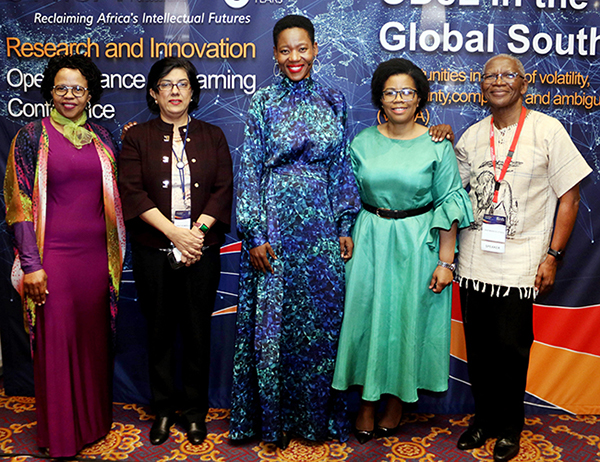
Unisa and the University of Namibia are exploring new partnerships in aviation
The University of South Africa (Unisa) and the University of Namibia (UNAM) are exploring closer collaboration in aviation, entrepreneurship, research and postgraduate development, as the two institutions seek to combine their expertise to address shared challenges and unlock new opportunities across Southern Africa.
The discussions took place in Windhoek, Namibia, on the sidelines of the African Futures Conference 2026, held from 1 to 2 October and organised by UNAM's Faculty of Commerce, Management and Law.
The engagement brought together senior academics and university leaders to identify areas where the institutions could develop joint programmes, strengthen research networks and contribute to economic and academic development on the continent.
Representing Unisa were Distinguished Prof Angelo Dube from the College of Law (CLAW), Distinguished Prof Evelyn Chiloane and Dr Nthabeleng Mmako from the College of Economic and Management Sciences (CEMS).
The UNAM delegation included Prof Yvonne Dausab, Executive Dean of the Faculty of Commerce, Management and Law; Dr Kennedy Kariseb, Associate Dean; Prof Ellen Namhila, Pro-Vice Chancellor for Finance, Administration and Resource Mobilisation; and Prof Alfons Mosimane.
At the heart of the discussions was a shared recognition that African universities have much to gain from working more closely together, particularly in developing research and academic programmes that respond to the continent’s needs.
Aviation featured prominently in the discussions, with UNAM expressing interest in Unisa's expanding activities in the sector.
The Namibian university congratulated Unisa on its acquisition of an airfield in Pretoria East, recognising the opportunities the facility could create for aviation education, research, innovation and industry engagement.
For Unisa, the airfield represents an opportunity to strengthen the connection between academic scholarship and practical applications within the aviation industry.
Dube outlined several initiatives being developed by the university, including efforts to operationalise the Pretoria East airfield and expand research into the economic potential of aviation.
Among these is Project ESRAE, the Engaged Scholarship on the Rural Aviation Economy, which is mapping South Africa’s rural aviation ecosystem.
The project examines aviation beyond its traditional role as a means of transport, exploring how it can support economic development, improve regional connectivity and create opportunities for communities outside major urban centres.
Its research considers aviation infrastructure, skills development, business opportunities, accessibility and the contribution that smaller aviation facilities could make to local economies.
Dube identified an opportunity to extend the research into Namibia, where similar geographical and developmental conditions could provide valuable insights.
"South Africa and Namibia share a number of characteristics that make comparative work particularly valuable," he said.
Expanding Project ESRAE into Namibia could enable researchers from both institutions to examine the similarities and differences between their rural aviation sectors and identify opportunities for regional cooperation.
Such collaboration could also provide evidence to inform aviation policy, infrastructure planning, skills development and investment decisions.
The discussions highlighted the potential for aviation to become a catalyst for economic activity, particularly in rural and underserved areas.
For both universities, the opportunity extends beyond developing aviation qualifications. It includes understanding how aviation infrastructure and related industries can contribute to tourism, trade, logistics, entrepreneurship and regional development.
Dube also shared information about Unisa's aviation-related academic programmes under development and the university's flagship Aerotropolis Symposium, hosted by its Gauteng Region.
The symposium provides a platform for engagement between academics, industry representatives, policymakers and other stakeholders on the role of aviation and aerotropolis development in economic growth.
The proposed collaboration with UNAM could broaden these discussions to include Namibia's aviation industry and strengthen opportunities for comparative research.
These initiatives align with Unisa’s Catalytic Niche Area of Aviation and Aeronautical Studies, which seeks to advance scholarship, innovation and industry engagement in the aviation sector.
They also support the objectives of the United Nations Sustainable Development Goal 9, which promotes resilient infrastructure, industrial development and innovation, particularly where aviation can improve connectivity and stimulate economic opportunities.
Entrepreneurship emerged as another important area in which the two universities could strengthen cooperation.
Chiloane emphasised the need to establish a shared platform that would enable Unisa and UNAM to collaborate on entrepreneurship education, research and development.
She proposed exploring ways to integrate entrepreneurial thinking across academic disciplines rather than limiting it to programmes traditionally associated with business and management.
Such an approach would encourage students from different fields to develop the skills needed to identify opportunities, solve problems and create sustainable enterprises.
The discussions also considered the broader entrepreneurship landscape in sub-Saharan Africa and how universities could contribute to developing solutions that respond to regional economic challenges.
By combining their academic expertise and institutional networks, the universities could explore joint initiatives that connect entrepreneurship education with research, innovation and community development.
This approach recognises that entrepreneurship is not only about establishing businesses, but also about developing creativity, initiative and the capacity to translate knowledge into practical solutions.
The proposed collaboration could contribute to SDG 8, which promotes decent work, productive employment and inclusive economic growth, particularly through skills development and support for entrepreneurship.
Beyond aviation and entrepreneurship, the meeting identified opportunities for academic cooperation and curriculum development.
UNAM indicated that it would welcome Unisa's expertise in reviewing several undergraduate programmes scheduled for evaluation in 2027.
This presents an opportunity for academics from both institutions to exchange knowledge, share approaches to curriculum design and strengthen the relevance of academic offerings.
The discussions also explored possibilities for postgraduate development, including collaboration that could strengthen research capacity and academic networks.
Mmako emphasised the importance of joint research projects and scholarly publications as practical ways of building lasting institutional relationships.
She noted that collaboration could enable academics from the two universities to develop research initiatives together, publish jointly and establish sustained partnerships across disciplines.
Such cooperation could also create opportunities for postgraduate students to participate in research networks that extend beyond their home institutions.
For Unisa, these engagements reinforce its commitment to advancing research excellence while expanding opportunities for African scholars to collaborate on issues of mutual interest.
A recurring theme throughout the engagement was the importance of strengthening South-South collaboration and encouraging African universities to draw more extensively on one another’s expertise.
Participants recognised that African institutions possess valuable knowledge, research capabilities and practical experience that can contribute to solving challenges facing the continent.
However, international academic collaboration has historically placed considerable emphasis on partnerships with institutions in the Global North.
The discussions between Unisa and UNAM reflected a desire to broaden this approach by developing stronger research networks within Africa.
Such partnerships could enable universities to identify shared priorities, develop contextually relevant research and contribute to solutions informed by African experiences.
UNAM expressed interest in learning from Unisa's pioneering initiatives, particularly in aviation and entrepreneurship, while contributing its own expertise and understanding of the Namibian context.
The proposed collaboration also aligns with SDG 17, which encourages partnerships that mobilise knowledge, expertise and resources to advance sustainable development.
By strengthening relationships between African institutions, Unisa and UNAM could contribute to a more connected and collaborative higher education landscape.
The two universities also recognised that meaningful progress in aviation and entrepreneurship requires engagement beyond academia.
Future collaboration could involve Namibian aviation stakeholders, regulatory authorities, industry representatives and entrepreneurs.
Such engagement would allow research and academic programmes to respond more directly to industry needs while creating opportunities for innovation, professional development and practical learning.
In aviation, cooperation with regulators and industry players could help researchers better understand infrastructure requirements, operational challenges, skills shortages and opportunities for sector development.
Similarly, closer engagement with entrepreneurs and business organisations could strengthen the relevance of entrepreneurship education and support research that addresses practical economic challenges.
The discussions therefore pointed towards a collaborative approach that connects universities with the industries and communities they serve.
The Windhoek engagement concluded with a shared interest in developing more structured cooperation between Unisa and UNAM.
While the discussions identified several promising areas for collaboration, the next phase will involve determining how these opportunities can be translated into practical programmes, joint research projects and sustained institutional partnerships.
For Unisa, the meeting reinforced the strategic importance of building stronger relationships with African universities and expanding its contribution to research, innovation and regional development.
For UNAM, the engagement opened opportunities to participate in Unisa's growing aviation and entrepreneurship initiatives while exploring cooperation in curriculum development, postgraduate education and scholarly publication.
The discussions also demonstrated how universities can use their respective strengths to pursue common goals without duplicating efforts or working in isolation.
Held alongside a conference dedicated to Africa's future, the meeting reflected a broader vision of African universities taking greater responsibility for shaping the continent’s academic, technological and economic development.
The significance of the engagement will ultimately be measured by what follows: joint research, stronger academic programmes, expanded opportunities for students and partnerships that deliver meaningful benefits to both countries.
For Unisa and UNAM, the opportunity is to move beyond dialogue and establish a lasting relationship that places African expertise, collaboration and innovation at the centre of their shared ambitions.
*By Prof Angelo Dube, Commercial Pilot and Distinguished Professor: Aviation and Aeronautical Studies, College of Law.
Publish date: 2026/10/09

 Unisa hackathon winners develop AI solution to support students at risk of falling behind
 Beyond Black Wednesday: Unisa lecture calls for urgent action to protect media freedom and public broadcasting
 Unisa celebrates 25 new PhD graduates advancing research and innovation
 From Maramanzhi to master's: Unisa graduate champions Tshivenda through scholarship
 Unisa students help shape digital complaints system to improve accountability and service delivery