
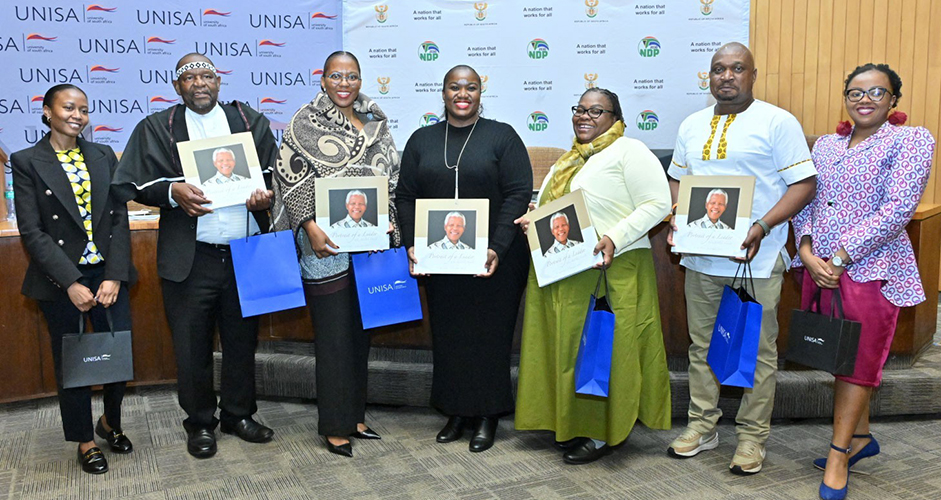
From left: Tshidi Nchabeleng, GCIS Director of Stakeholder Management and Special Projects; Dr Mathole Motshekga, Executive Director of the Kara Heritage Institute; Shoeshoe Qhu, Chief Executive Officer of the Media Development and Diversity Agency; Nolwazi Mwabi, Unisa Director of Communications, Marketing and Events; Prof Nokuthula Hlabangane, Professor of Anthropology at Unisa; Amos Mulaudzi, Programmes Manager at the National Heritage Council; and Mosidi Mokgele, Programme Director and Facilitator.
South Africa cannot meaningfully preserve its heritage without confronting difficult questions about whose history is recorded, whose knowledge is taught and whose voices have been excluded from the country's dominant narratives.
That message emerged strongly at the inaugural monthly dialogue hosted by the University of South Africa (Unisa) and the Government Communication and Information System (GCIS), where academics, heritage practitioners and media leaders called for greater recognition of African knowledge systems and a willingness to "unlearn" established ways of understanding history and education.
Held at Senate Hall in the Winnie Madikizela-Mandela Building at Unisa's Muckleneuk Campus, the dialogue took place under the theme "South Africa's heritage as a key milestone: Institutions and society".
It marked the beginning of a series of monthly engagements between Unisa and GCIS aimed at creating a platform for conversations about issues affecting South African society and the role institutions can play in responding to them.
Opening the dialogue, Unisa Director of Communications, Marketing and Events Nolwazi Mwabi argued that Heritage Month should be about more than an annual celebration.
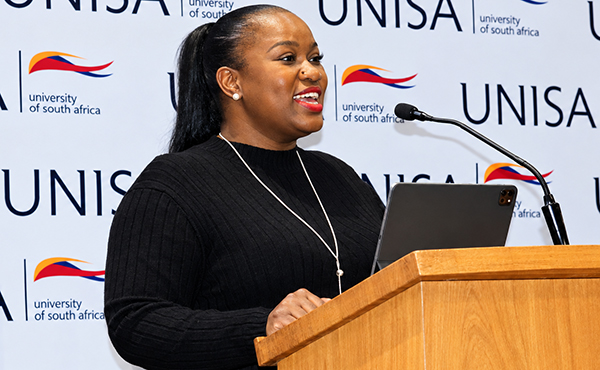
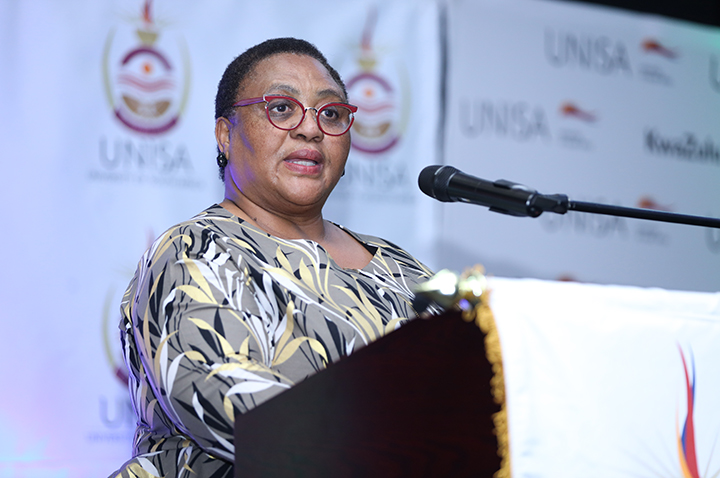
Nolwazi Mwabi, Unisa Director of Communications, Marketing and Events.
Instead, she said, institutions should use it to interrogate whose histories are preserved, which voices have been excluded and how indigenous knowledge is recognised.
"Heritage lives not only in monuments and archives. It lives in people," she said.
For universities, this creates a particular responsibility.
Mwabi said higher education institutions should not simply preserve existing bodies of knowledge, but critically examine how that knowledge was produced and whose experiences it represents.
"Preserving knowledge is not enough. A university must also interrogate it," she said.
That question of whose knowledge is recognised became a recurring theme throughout the dialogue.
Dr Mathole Motshekga, Executive Director of the Kara Heritage Institute, called for the decolonisation of education and greater recognition of African knowledge systems.
He argued that the teaching of African history needed to be reconsidered, particularly where indigenous knowledge had been marginalised, misunderstood or recorded without sufficient knowledge of African languages and cultural contexts.
For Motshekga, decolonisation begins with how Africans understand themselves and their history.
"Unless we decolonise our minds and the country, we will not know ourselves. We will not know who we are, where we come from, why we are here and where we are going."
He questioned the reliability of some historical accounts produced without a deep understanding of the languages, cultures and communities being documented.
His argument extended beyond correcting the historical record. It raised questions about the place African knowledge systems occupy in contemporary schools and universities and whether education adequately reflects the societies it is intended to serve.
The media's role in preserving and communicating heritage also came under scrutiny.
Shoeshoe Qhu, Chief Executive Officer of the Media Development and Diversity Agency (MDDA), called for greater visibility for stories about South Africa's diverse communities, particularly those whose languages and experiences remain underrepresented in mainstream media.
She argued that heritage is too often treated as an annual event rather than a living part of everyday society.
"We make an occasion of our heritage. We give that to September, and then we put the blankets away, we put the beads away until the wedding or September next year," she said.
Qhu also questioned whether institutions that preserve knowledge are doing enough to make it accessible to the communities from which much of that knowledge originates.
"We preserve our culture, we have institutions that preserve knowledge and culture. We do not have institutions that facilitate the transparency of knowledge," she said.
She called on media and communication professionals to broaden their understanding of expertise by recognising knowledge acquired outside formal academic institutions, particularly knowledge held by elders and transmitted through generations.
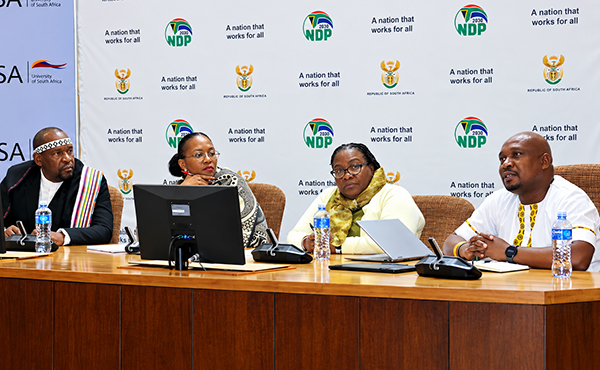
Panellists engage during the inaugural Unisa-GCIS monthly heritage dialogue at Unisa's Muckleneuk Campus.
Prof Nokuthula Hlabangane, Professor of Anthropology at Unisa, turned the discussion directly towards universities and their role in determining what is recognised as legitimate knowledge.
Drawing on her work with communities, Hlabangane called for greater recognition of knowledge passed down through generations and challenged universities to critically examine their teaching practices.
"The question is, what is heritage? Whose heritage is being taught and passed down?" she asked.
Her intervention placed universities at the centre of the debate. If higher education institutions are responsible for producing, teaching and preserving knowledge, they must also consider which knowledge systems have historically been privileged and which have been marginalised.
The discussion suggested that decolonisation requires more than adding African content to an existing curriculum. It also requires institutions to interrogate the assumptions that determine what counts as knowledge in the first place.
Amos Mulaudzi, Programmes Manager at the National Heritage Council, emphasised the importance of elders as custodians of indigenous knowledge.
He said the Council regarded elders as "the actual professors, because that's where education starts".
Mulaudzi encouraged communities to create opportunities for younger generations to learn directly from elders through storytelling and indigenous languages.
Technology, he said, could also play an important role in recording, preserving and sharing heritage with younger generations.
However, he cautioned that digitising indigenous knowledge required sensitivity and consent. Not all cultural practices or traditions are intended for unrestricted public consumption, and communities should retain a say over how their knowledge is recorded and shared.
His contribution added another dimension to the discussion: preserving indigenous knowledge must not result in communities losing control over it.
Closing the dialogue, GCIS Director of Stakeholder Management and Special Projects Tshidi Nchabeleng said the partnership with Unisa was deliberate because of the university’s role in society and its responsibility as a producer and custodian of knowledge.
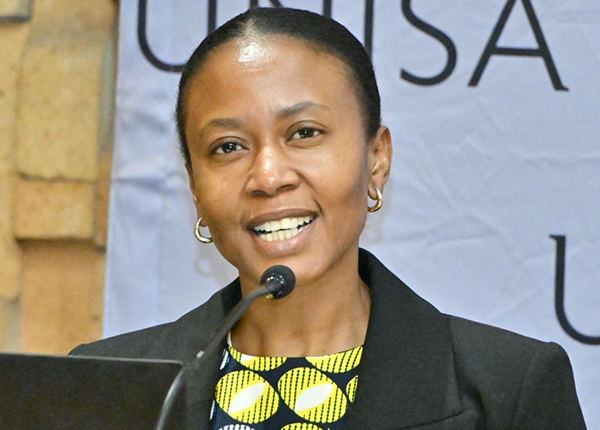
Tshidi Nchabeleng, GCIS Director of Stakeholder Management and Special Projects.
She said the monthly dialogues would create space to examine South Africa’s heritage and the knowledge systems that continue to shape society.
"We need to decolonise the mind through curriculum," she said.
Nchabeleng also called for closer attention to the information people consume and the knowledge transmitted through education.
The inaugural dialogue ultimately raised questions that extend well beyond Heritage Month.
If heritage lives not only in archives and monuments but also in languages, communities, memories and lived experiences, preserving it requires institutions to consider whose knowledge they recognise and how that knowledge reaches future generations.
For universities, that means interrogating what is taught and how it is taught. For the media, it means widening whose stories are considered worthy of telling. For heritage institutions, it means preserving knowledge without separating it from the communities that hold it.
And for the Unisa-GCIS monthly dialogue, those questions provide a starting point for further conversations about knowledge, heritage and the institutions that help shape how South Africans understand themselves and their history.
* By Noxolo Miya, Journalist, Department of Institutional Advancement
* Photography by Shooheima Champion, Unisa Multimedia
Publish date: 2026/10/01

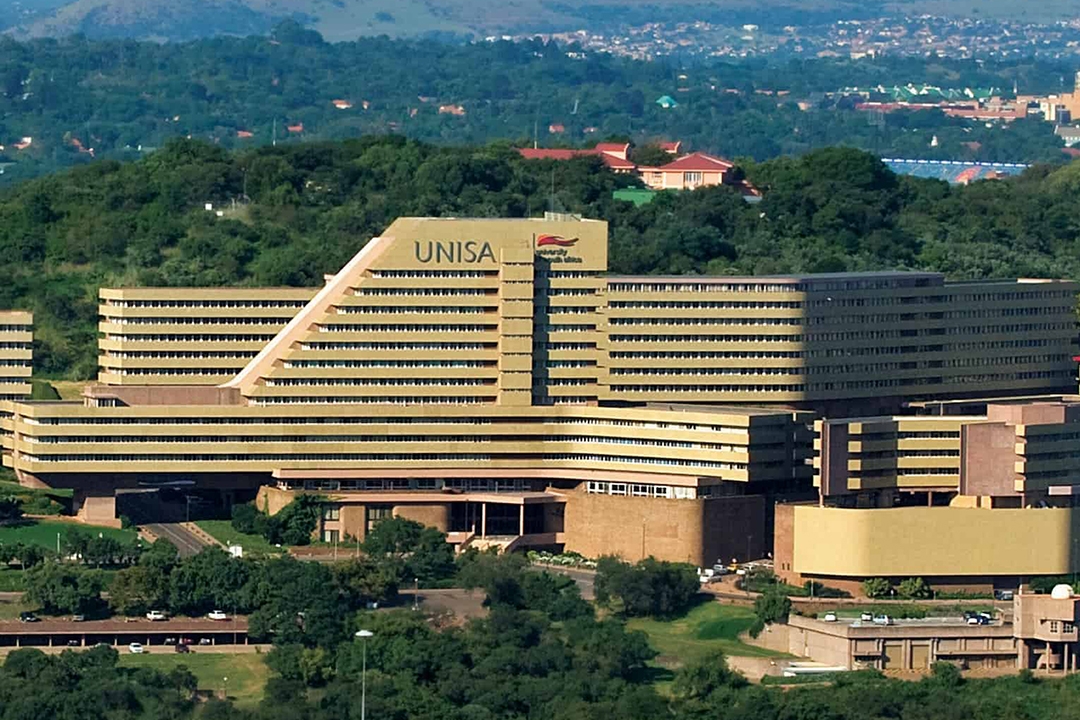 Unisa strengthens global standing in 2027 Times Higher Education World University Rankings
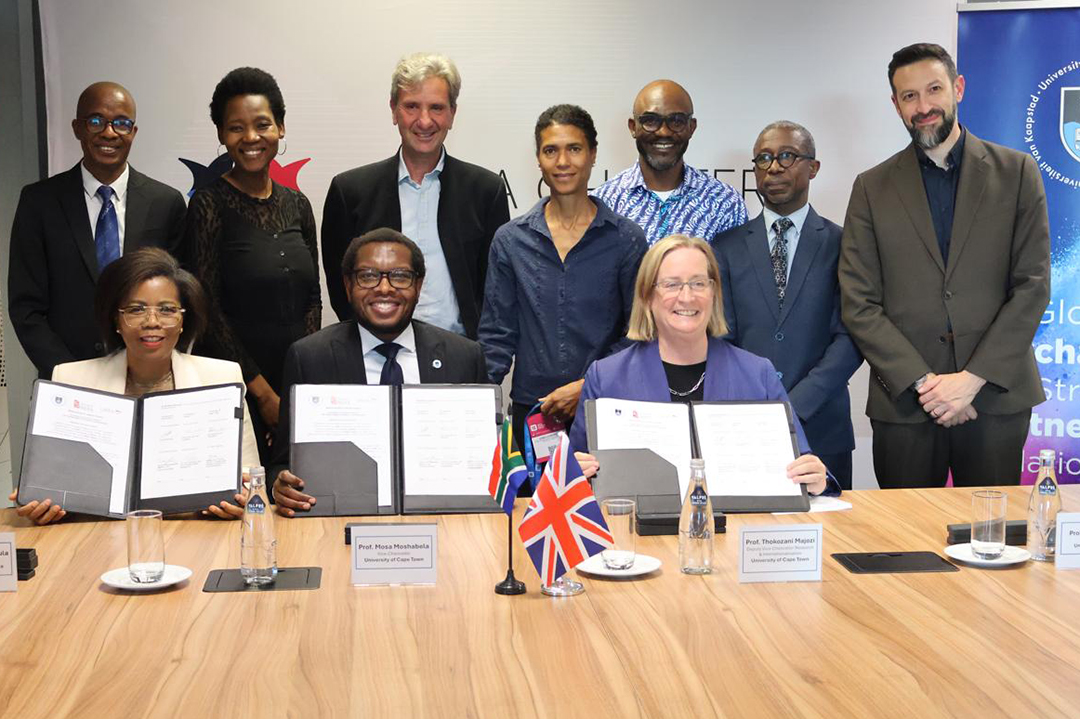 Unisa, UCT and University of Bristol strengthen partnership to transform global research collaboration
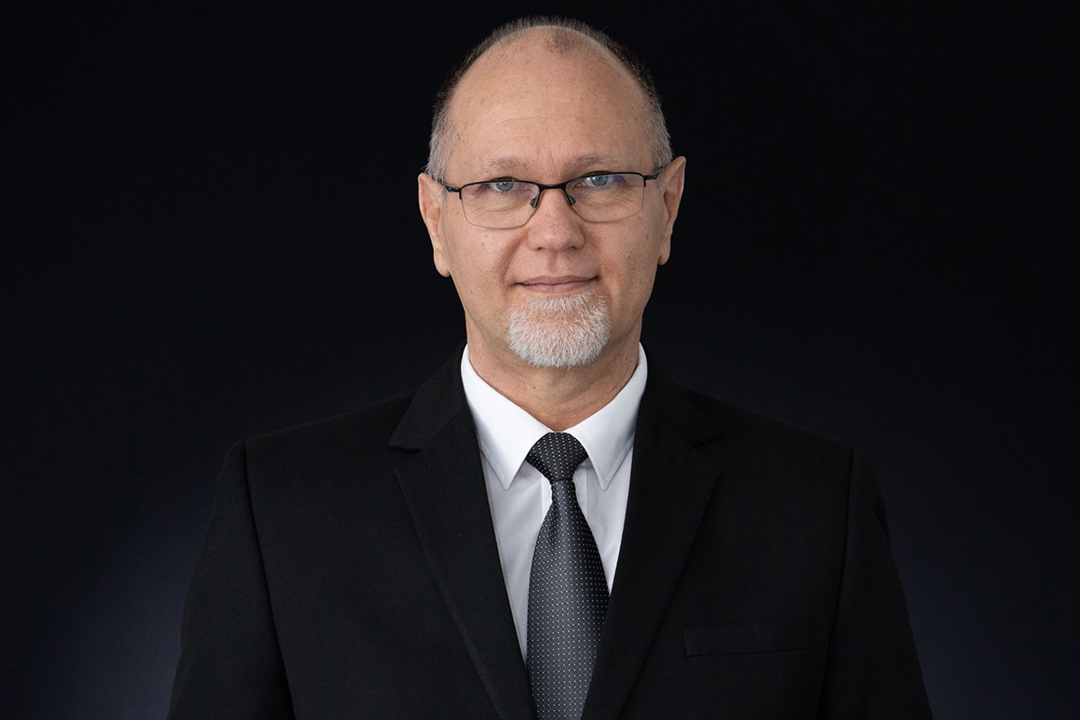 Prof Lessing Labuschagne takes helm of Unisa's Research and Innovation portfolio
 Unisa Spring Graduation opens with stories of perseverance and achievement
 Unisa academic helps develop AI system to stay ahead of cryptocurrency scams