


College of Accounting Sciences management with distinguished guests at the official launch of the Unisa Online Tax Clinic at the Kgorong Function Hall on 6 August 2026. The launch marked a significant step towards expanding access to free tax guidance while strengthening practical learning for postgraduate taxation students.
South Africans who need help navigating their tax affairs will no longer necessarily have to travel to a tax professional for assistance.
The University of South Africa (Unisa) has launched the Unisa Online Tax Clinic (UOTC), a new initiative that will provide free tax guidance remotely while giving postgraduate taxation students the opportunity to work on real taxpayer matters under professional supervision.
The clinic was officially launched on 6 August 2026 at the Kgorong Function Hall on Unisa's Main Campus. The event brought together Unisa leaders, government officials, professional bodies, academics and international guests to mark what the university described as an important step in expanding access to tax assistance through its Comprehensive Open Distance e-Learning (CODeL) model.
The UOTC connects taxpayers, postgraduate students and qualified tax practitioner supervisors online, allowing consultations to take place without requiring taxpayers to visit a physical office.
For Unisa students, the initiative offers something that traditional classroom learning cannot always provide: direct exposure to real-world tax matters.
Unisa currently has 536 students enrolled in its recently revamped Postgraduate Diploma in Taxation, creating a substantial pool of students who can benefit from the clinic’s practical learning environment.
Acting Vice-Principal: Research, Postgraduate Studies, Innovation and Commercialisation, Prof Mpho Ngoepe, said the clinic demonstrates how Unisa can use its distance-learning model to extend the university’s impact beyond its campuses.
He said the initiative takes education "beyond the classroom" by combining teaching, community engagement and research.
The online format is particularly relevant to taxpayers in rural and underserved communities, as well as people such as informal traders and pensioners who may find it difficult to access professional tax services.
For students, the clinic provides an opportunity to apply their academic knowledge to actual taxpayer circumstances while learning about the ethical and professional responsibilities that come with providing tax assistance.
Ngoepe also pointed to the research potential of the clinic. Experiences arising from taxpayer consultations could provide valuable insight into how ordinary South Africans understand the tax system, where they encounter difficulties and what barriers may prevent them from meeting their tax obligations.
The initiative has received strong backing from the South African Revenue Service (SARS), with Commissioner Dr Johnstone Makhubu describing the clinic as a potential partner in improving taxpayer support.
Makhubu acknowledged that SARS cannot reach every taxpayer on its own and said partnerships with universities such as Unisa could help extend assistance to people who might otherwise struggle to obtain professional guidance.
He described the UOTC as an opportunity to "reach the unreachable", particularly through a more empathetic approach to taxpayer service.
The Commissioner also highlighted the potential contribution of the clinic to voluntary tax compliance. When taxpayers understand their obligations and receive assistance in dealing with tax matters, they are better positioned to comply with the tax system.
SARS Commissioner Dr Johnstone Makhubu
Makhubu stressed that the UOTC should not be viewed as a competitor to SARS.
Instead, he said it could complement the work of the revenue service by helping taxpayers understand their responsibilities and navigate tax-related challenges.
He pledged SARS's support for the initiative and said the two institutions could exchange insights and best practices as the pilot develops.
Tax Ombud Ms Yanga Mputa also endorsed the initiative, highlighting the complementary roles that could be played by the UOTC and the Office of the Tax Ombud.
The clinic can assist taxpayers at an early stage by helping them understand and address tax-related issues. The Office of the Tax Ombud, meanwhile, deals with complaints relating to SARS’s service, administrative and procedural matters.
"This illustrates how our respective institutions, while independent of one another, can make complementary contributions towards a tax system that is fair, efficient, and accessible," Mputa said.
Speaking during Women's Month, she also highlighted the importance of creating practical opportunities for women entering the taxation profession.
She welcomed the fact that the UOTC is led by a woman and reaffirmed the Office of the Tax Ombud's support for the initiative.
Tax Ombud; Ms Yanga Mputa endorsed the Unisa Online Tax Clinic
The launch also brought an international perspective to clinical tax education.
Donovan Castelyn, Honorary Professor at Unisa and Director of the University of Tasmania Tax Clinic, delivered the public lecture at the launch, drawing on eight years of experience running a similar clinic in Australia.
His central message was that tax problems often cannot be understood simply by looking at the tax issue itself.
"A tax problem is never only a tax problem," Castelyn said.
He explained that tax difficulties can be connected to wider circumstances such as unemployment, debt, illness and housing insecurity.
Castelyn illustrated the point through a case involving a former prisoner with a brain injury. What initially appeared to be a straightforward administrative matter required a much deeper understanding of the taxpayer’s personal circumstances.
For students, he said, clinical tax education therefore involves more than learning how to apply tax legislation. It teaches them to understand the person behind the tax problem.
Castelyn identified three key benefits of tax clinics: helping taxpayers who need assistance, identifying systemic challenges within the tax system and giving students practical experience.
For the UOTC’s inaugural student cohort, the launch represents the start of a new form of professional learning at Unisa.
Ngoepe told the students that they were helping to shape the future of clinical tax education within a CODeL institution, describing them as "making history".
He also reminded them that the opportunity came with a responsibility to represent both Unisa and the taxation profession with integrity and professionalism.
Through the clinic, students will work with real taxpayer matters under professional supervision, allowing them to move beyond hypothetical classroom scenarios and experience the complexities of providing tax guidance to members of the public.
The model brings together three of Unisa’s core areas of work: teaching, research and community engagement.
It also demonstrates how the university's CODeL model can be applied beyond conventional academic programmes, using online learning infrastructure to connect expertise with communities across South Africa.
The UOTC is a flagship Engaged Scholarship project led by Dr Kerry De Hart, an academic in Unisa's Department of Taxation in the College of Accounting Sciences.
By combining student learning with free community-based tax assistance, the clinic creates a direct link between what students learn in their postgraduate studies and the challenges faced by taxpayers outside the university.
For Unisa, the initiative represents more than the launch of another online service. It is an opportunity to demonstrate how distance education can be used to widen access to professional knowledge while preparing students for the realities of their chosen profession.
* By Ntsako Mohlaba, CAS Communication and Marketing Specialist.
Publish date: 2026/08/19

 Unisa strengthens global standing in 2027 Times Higher Education World University Rankings
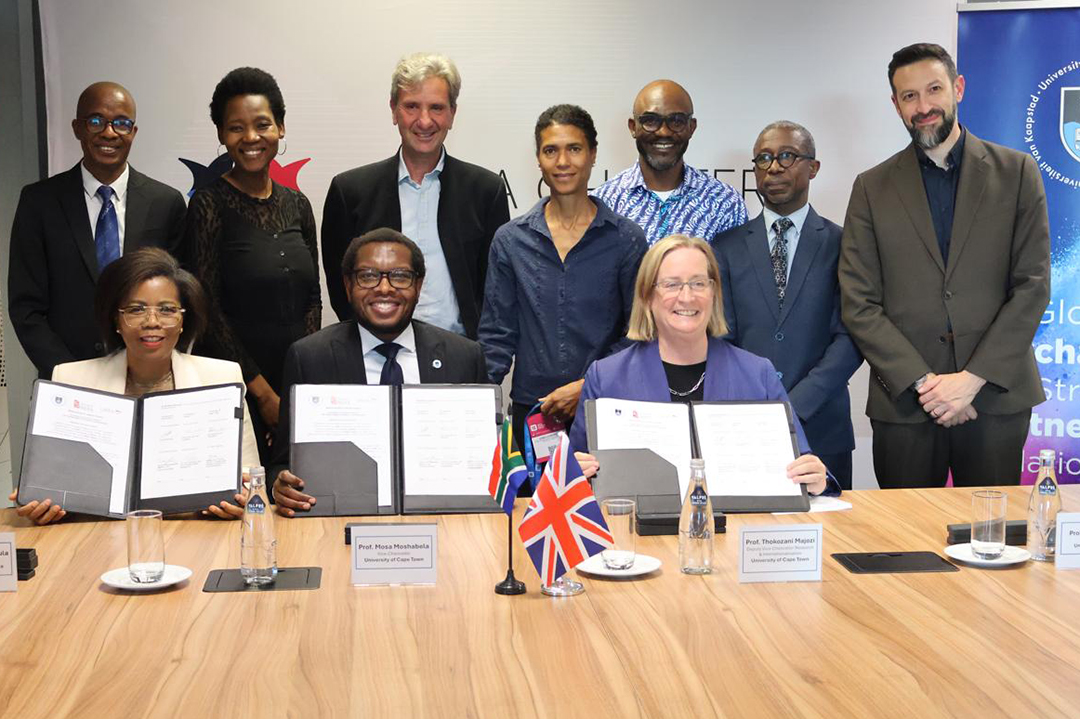 Unisa, UCT and University of Bristol strengthen partnership to transform global research collaboration
 Prof Lessing Labuschagne takes helm of Unisa's Research and Innovation portfolio
 Unisa Spring Graduation opens with stories of perseverance and achievement
 Unisa academic helps develop AI system to stay ahead of cryptocurrency scams